Jageshwar residents rise in protest against shifting of priceless Idols to New Delhi
Jageshwar residents rise in protest against shifting of priceless Idols to New Delhi
B.D.Kasniyal
Pithoragarh, Nov 28
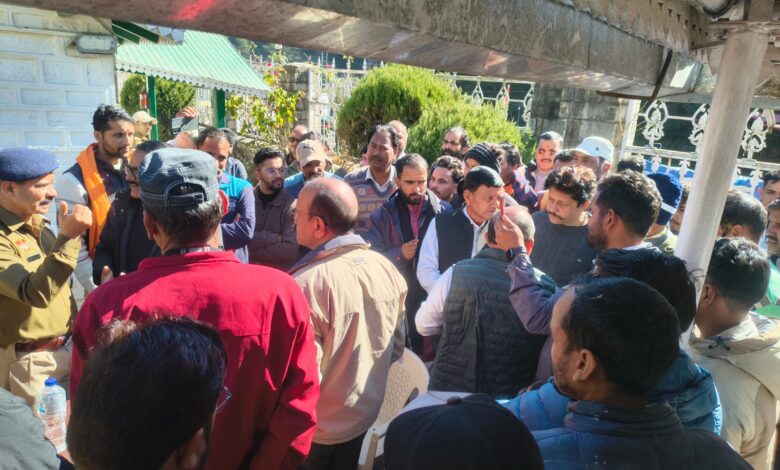
Thousands of residents of Jageshwar and adjoining villages gathered at the Jageshwar Museum today to oppose the proposed shifting of its precious ancient idols to New Delhi, where the Government of India is developing the ‘Yug Yugeen’ Museum between the North and South Blocks. The proposed museum is envisaged as one of the world’s largest museums, showcasing India’s cultural history spanning over 5,000 years.
“After learning that an Archaeological Survey of India (ASI) team from Delhi had arrived here to take away the precious idols displayed in our museum, thousands of villagers from the areas surrounding the Jageshwar temple gathered and warned the team that any attempt to shift the ancient idols would trigger a public agitation. The villagers would also launch an indefinite dharna outside the museum,” said Hari Mohan Bhatt, a priest at the Jageshwar temple.
“The villagers have also written to the Director General of the Archaeological Survey of India in Delhi, requesting him not to shift the idols. They have warned that if any law-and-order situation arises due to public opposition, the responsibility would rest with the department,” said Navin Bhatt, former vice-president of the Jageshwar temple committee.
The Jageshwar Museum houses more than 274 rare and ancient idols, including those of Lakulisha Shiva and Paun Raja, according to local sources.
The Government of India is developing the proposed ‘Yug Yugeen’ Museum over an area of approximately one lakh square metres. It is planned as a major cultural institution showcasing India’s heritage through various thematic sections covering architecture, urban civilisation, mathematics and astronomy, languages and scripts, religion and spirituality, and trade and cultural relations in ancient India, tracing the country’s civilisational journey over the past 5,000 years.