The Right to Dissent, the Meaning of Public Order, and the Test of Constitutional Democracy
The Right to Dissent, the Meaning of Public Order, and the Test of Constitutional Democracy
Police Power in Democratic India
Khursheed Ahmed Siddiqui
Dehradun, Oct 12
Democracy is not defined merely by the conduct of elections or the existence of a government elected by the people. The real strength of a democracy lies in how effectively it protects the constitutional rights of citizens, how freely people can question those in power, how impartially constitutional institutions function, and to what extent the government accepts peaceful dissent.
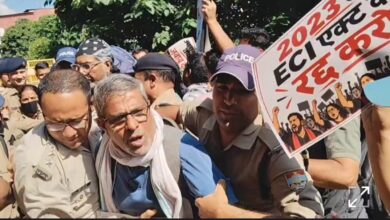
The events surrounding the proposed protest by the Cockroach Janta Party (CJP) at Jantar Mantar in Delhi on 10 October 2026 have once again raised an important question: How much power should the police possess in a democracy, and where should the limits of that power lie?
According to media reports, Delhi Police denied permission for the proposed demonstration and detained a large number of people who attempted to reach the protest site. The police reportedly cited procedural deficiencies and law-and-order concerns, while the demonstrators sought to raise their demands publicly. The extensive security arrangements and large-scale detentions have raised questions about whether the administration could have achieved its objectives through less restrictive measures.
The Constitutional Right to Protest
Article 19(1)(a) of the Constitution of India guarantees citizens the freedom of speech and expression. Article 19(1)(b) guarantees the right to assemble peacefully and without arms. These rights are subject to reasonable restrictions imposed by law on constitutionally permissible grounds.
These rights are not privileges granted at the discretion of a ruling party or the administration. They are fundamental rights of citizens. Peaceful protests provide people with an opportunity to express their grievances, demand accountability from the government, and raise their voices against injustice.
However, these rights must be exercised within the framework of law and the Constitution. The State has the authority to impose reasonable restrictions on grounds such as public order and other constitutionally recognised considerations. The real constitutional question is whether a restriction is lawful, necessary, proportionate, and impartial.
When permission for a peaceful demonstration is denied, the administration should clearly state its reasons. It should also consider whether potential problems could be addressed through alternative venues, specified time limits, restrictions on the number of participants, and appropriate security arrangements.
What Does “Public Order” Actually Mean?
The expression “public order” is frequently invoked to justify restrictions on demonstrations, the detention of individuals, and the extensive deployment of police personnel. Undoubtedly, maintaining public order is an important responsibility of the State. However, the concept of public order cannot be transformed into an unlimited authority to suppress criticism of the government or silence inconvenient questions.
There is a fundamental difference between preventing violence and suppressing dissent. A peaceful demonstration may criticise the government, demand the resignation of a public official, or question the functioning of constitutional institutions. A demand should not be treated as a threat to public order merely because it makes the government uncomfortable.
The administration must assess genuine and credible risks. It is unreasonable to assume that every demonstration will inevitably lead to violence or disorder. Restrictions should be based on actual circumstances rather than the political sensitivity of a protest.
The duty of the police is to enforce the law, not to decide which opinions citizens may express. Police powers are legitimate only when exercised within the limits established by the Constitution, the law, and judicial oversight.
Could the Situation in Delhi Have Been Handled Differently?
The events of 10 October raise a reasonable question: Could the administration have permitted a few hundred people to assemble peacefully at Jantar Mantar under clearly defined conditions?
If appropriate security measures, crowd management, time limits, and lawful directions could have controlled potential risks, such an arrangement might have protected both the right to protest and the need to maintain public order.
By contrast, reports of large-scale detentions and restrictive measures have raised questions about the necessity and proportionality of the administrative response, the expenditure of public money, and the inconvenience caused to ordinary citizens. The legality of each police action must be assessed on the basis of the relevant evidence and applicable law.
Nevertheless, one broad principle remains clear: preventive action should not be turned into punishment merely because people intend to participate in a protest. The government and the police may have legitimate concerns about violence, traffic disruption, or non-compliance with lawful directions. Such concerns cannot simply be ignored. However, the administration should also explain why the measures adopted were necessary and whether less restrictive alternatives would have been sufficient.
Why Should the General Public Have to Bear the Cost?
When extensive security arrangements are made to prevent or control a major demonstration, the consequences extend beyond the protesters and the administration. Commuters, employees, students, patients, traders, and ordinary residents may face travel difficulties, delays, and disruptions to their daily lives.
This raises an important question of public interest: If a peaceful assembly can be organised under reasonable and lawful conditions, would it not be wiser to facilitate such an arrangement rather than impose unnecessary hardship and expenditure on protesters, police personnel, and ordinary citizens alike?
Public funds should be used to protect citizens, maintain essential services, and ensure lawful public order. When extraordinary police deployment, traffic restrictions, or large-scale detentions are considered necessary, the public also has a legitimate interest in understanding the reasons behind these measures.
Demolition of a Mosque on the Saharanpur Court Complex:
The Importance of Judicial Process
Another serious concern relates to the reported demolition of a mosque situated within the Saharanpur court complex. According to the account available, the action was carried out amid police deployment and administrative restrictions, without waiting for the proceedings in the relevant appeal to conclude.
However, the legal status of the property, the applicable administrative and judicial orders, the circumstances surrounding the demolition, and the actual status of the appeal must be verified through official records.
Nevertheless, the matter serves as a reminder of an important principle that applies equally to religious places, private properties, and public buildings: executive power is subject to law, and judicial process cannot be disregarded merely because it causes administrative inconvenience.
Where an appeal or an application for interim relief is pending, its legal implications must be determined according to the applicable law and the relevant court orders. The mere filing of an appeal does not automatically stay every administrative action. Conversely, if a stay order, injunction, or other binding direction issued by a competent court is in force, the administration must comply with it.
The proper course is to establish the legal position clearly, respect the authority of the courts, and ensure that any demolition or coercive action is undertaken only in accordance with lawful authority and prescribed procedures.
In a constitutional democracy, the legal protection available to a citizen should not depend on religious identity, political ideology, or public pressure. The same standards of legality, fairness, and accountability must apply to everyone.
Bulldozer Action and the Rule of Law.
Demolitions carried out swiftly through administrative action have generated considerable debate about executive power, property rights, and access to judicial remedies. The government cannot replace judicial process with an administrative shortcut. Where the law requires notice, a hearing, a reasoned order, or an opportunity to seek judicial protection, compliance with these procedural safeguards is essential.
The Supreme Court of India has emphasised the importance of due process in cases involving punitive demolitions. At the same time, unauthorised constructions may be removed under the law through the prescribed legal procedures. The crucial distinction is between lawful administrative action and arbitrary action intended to punish people while disregarding essential legal safeguards.
The rule of law demands that neither an ordinary citizen nor a powerful government institution should stand above the law.
Police Power Must Be Accompanied by Accountability.
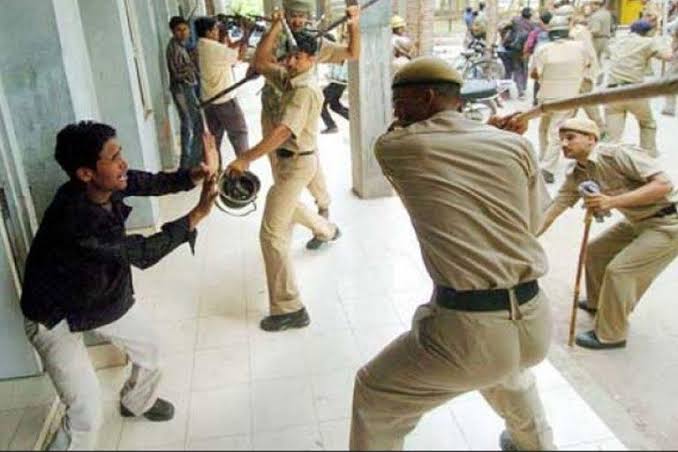
The police are an essential public institution. They protect life and property, investigate crimes, prevent violence, and maintain public order. A democratic society needs a capable and effective police force.
However, effectiveness does not mean unlimited authority. Police power is legitimate only when exercised in accordance with the law, through proper procedures, and with accountability.
Whenever allegations of excessive force, arbitrary detention, or unlawful restrictions arise, there should be an impartial inquiry. The grounds for detention should be properly recorded, legal safeguards relating to arrest must be respected, access to judicial remedies must be ensured, and allegations of police misconduct must be investigated appropriately.
Accountability does not weaken the police. On the contrary, it strengthens public confidence and distinguishes the legitimate exercise of authority from the arbitrary use of power.
Democracy or Authoritarianism? A Question for Every Citizen.
Is India a democracy, or is it moving towards authoritarian rule?
It would be inappropriate to reach a definitive conclusion on this question on the basis of a single incident. India has a constitutional framework, elected governments, courts, and fundamental rights recognised by law. The real question is how effectively these institutions and rights function in practice when citizens disagree with those in power.
Democracy is not tested when citizens praise the government, but when they criticise it. The test of democracy lies not merely in the existence of constitutional provisions but also in whether citizens can meaningfully exercise their rights.
We must also examine whether the police protect both peaceful demonstrators and the general public, and whether government institutions comply with court orders even in difficult or politically sensitive circumstances.
The government has a duty to maintain public order. Protesters have a duty to remain peaceful and comply with lawful restrictions. The police have a duty to enforce the law impartially. The courts have a duty to protect constitutional rights and examine the legality of government action. None of these responsibilities gives one institution the authority to extinguish the rights of another.
Ultimately, the question is not whether the State possesses power, but whether that power is being exercised within constitutional limits. A government confident in its democratic legitimacy should be willing to hear criticism, provide lawful avenues for peaceful protest, and justify restrictive measures through transparent reasons and supporting evidence.
Democracy is not strengthened by silencing every dissenting voice. It is strengthened when dissent can be expressed peacefully, public order is maintained impartially, and the same laws apply to the powerful as apply to ordinary citizens.
“The Constitution is not merely a document that grants powers to the government. It is also a safeguard that protects citizens against the arbitrary exercise of those powers.”
Therefore, the question is not simply whether India is a democracy or is moving towards authoritarianism. The fundamental question is whether every institution of the Indian State is prepared to uphold the constitutional promises that give democracy its true meaning and dignity.
(The writer is a social workers of Dehradun )