AIPEF demands immediate cancellation of Eleven Power’s parallel electricity distribution licence in Haryana
State Government urged to invoke Section 108 of the Electricity Act, 2003
AIPEF demands immediate cancellation of Eleven Power’s parallel electricity distribution licence in Haryana
State Government urged to invoke Section 108 of the Electricity Act, 2003
Chandigarh/Panchkula, Oct 23
The All India Power Engineers Federation (AIPEF) has strongly urged the Haryana Government to intervene immediately and take all necessary lawful steps to get the Haryana Electricity Regulatory Commission (HERC) order dated 19 October 2026, granting a 25-year parallel electricity distribution licence to Eleven Power Company Limited for Gurugram and Nuh, cancelled. AIPEF has demanded a clear Cabinet-level policy decision against parallel distribution licences and electricity privatisation in any form in Haryana.
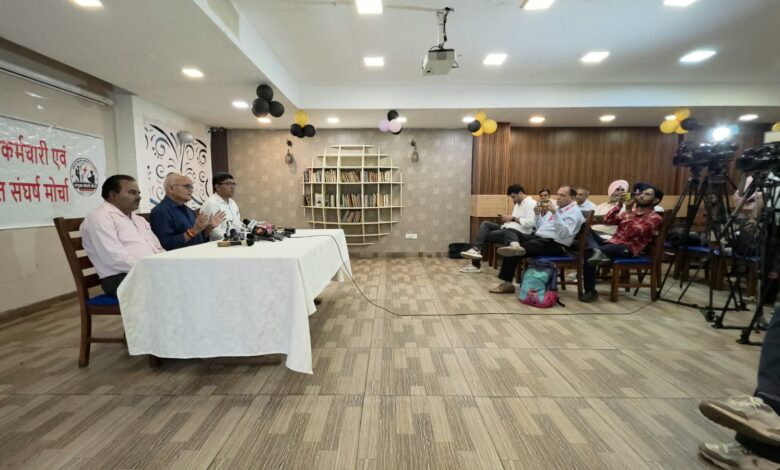
Er. Shailendra Dubey, Chairman, AIPEF; Er. Puneet Kundu, President, Haryana Power Engineers Association (HPEA); and Er. Ravinder Singh Ghanghas, General Secretary, HPEA, stated that the present crisis is the direct consequence of the decision to grant a parallel licence despite serious concerns regarding its long-term implications for public-sector power distribution, consumers, employees and the financial viability of the state-owned distribution companies.
AIPEF emphasised that the Haryana Government has an important statutory role under Section 108 of the Electricity Act, 2003, which provides for the State Electricity Regulatory Commission to be guided by government directions on questions of policy involving public interest. The government should immediately invoke its policy-direction powers and take appropriate lawful steps to ensure that the decision granting the parallel licence is reconsidered and cancelled.
The Federation said the State Government must not remain a passive spectator when a regulatory decision threatens the future of public-sector electricity distribution in Haryana. The government should use the powers available to it under the law and adopt a clear policy against parallel distribution licences in the state.
AIPEF pointed out that parallel electricity distribution licences have not become an established model anywhere in the country, including highly industrialised states such as Gujarat and Maharashtra. Haryana, with its predominantly agricultural economy and significant rural electricity obligations, must carefully consider the consequences before permitting private companies to compete with existing public-sector distribution utilities.
The Federation warned that a private company entering the distribution business primarily to earn profits would naturally seek to attract high-revenue industrial and commercial consumers. This could leave DHBVN with a disproportionate burden of agricultural supply, rural electrification, subsidised consumers and other costly obligations, while its revenue base shrinks. Such a development could seriously undermine the financial health of the public utility and ultimately place an additional burden on the state government and electricity consumers.
AIPEF cited the experience of Maharashtra, where private companies applied for parallel distribution licences in several cities in 2022, but the Maharashtra Electricity Regulatory Commission did not grant such licences over the subsequent four years. The Federation attributed this outcome to the effective stand taken by the Maharashtra Government against parallel licensing and the associated risks to public-sector distribution.
AIPEF urged the Haryana Government to demonstrate similar political will and take a firm policy stand in defence of public electricity distribution. The 19 October HERC order must not be allowed to create a precedent that could open the doors to further fragmentation and privatisation of Haryana’s power distribution system.
AIPEF further stated that the Joint Action Committee of power employees and engineers from Uttar Pradesh, Uttarakhand, Jammu and Kashmir, Punjab and Himachal Pradesh has written to the Haryana Chief Minister expressing solidarity with the ongoing struggle of Haryana’s power employees and engineers. The committee has conveyed that employees from these states will not go to Haryana to maintain power supply during the strike if Haryana’s employees and engineers are forced to resort to industrial action.
The Federation said this nationwide solidarity reflects the seriousness of the issue, which extends far beyond Haryana and concerns the future of public-sector electricity distribution throughout the country. AIPEF and power-sector organisations across states stand firmly with Haryana’s engineers and employees in their struggle to protect public utilities and consumer interests.
The AIPEF and HPEA leaders asserted that the present crisis is the responsibility of the state government and the decisions that have brought the power sector to this situation. Employees and engineers cannot be blamed for opposing a policy that they believe threatens the public utility, their service interests and the long-term interests of consumers.
The leaders appealed to the Chief Minister and the state government not to convert this issue into a matter of false prestige or treat the strike merely as a law-and-order problem. Confrontation, threats or disciplinary action will not resolve the underlying policy dispute. The solution lies in withdrawing the parallel licensing decision and addressing the legitimate concerns of employees and engineers through dialogue.
AIPEF has called upon the Haryana Government to immediately convene a Cabinet meeting, announce a clear policy against parallel electricity distribution licences and privatisation in any form, and take all necessary lawful measures to secure cancellation of the Eleven Power licence. Such timely intervention would protect public-sector utilities, safeguard consumer interests, restore industrial peace and prevent further escalation of the ongoing crisis.