One more division among Muslims to their peril
One more division among Muslims to their peril
Khursheed Ahmad Siddique,
Dehradun, Sept 16
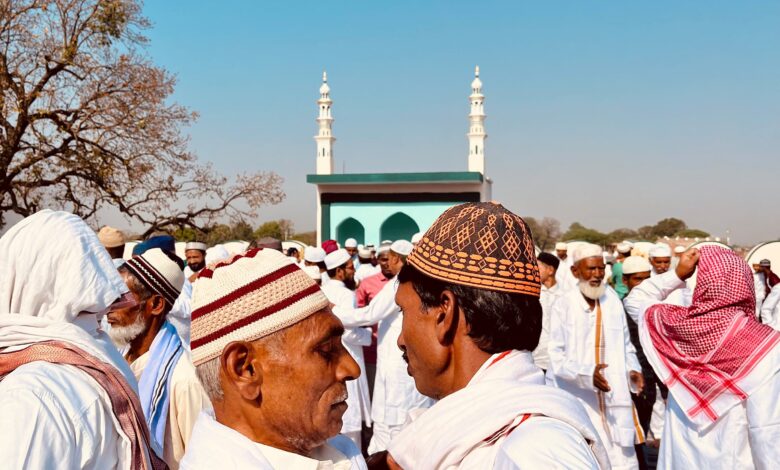
The Muslim community in India has never been a single, homogeneous social or cultural group. Across history, Muslims have differed in matters of theology, jurisprudence, tradition, language, region, social background and economic status. We have Shia and Sunni traditions; among Sunnis there are Deobandi, Barelvi, Ahl-e-Hadith and other interpretations. There are also distinctions based on geography—locals and outsiders, pahadi and maidaani, urban and rural, and many other identities.
These differences already constitute a complicated social landscape. The question before us today is whether we should allow yet another layer of division to become a permanent feature of Muslim political and social life.
Off late there has been constant debate and discussions in national media about the rights of Pasmanda Muslims and their alleged exploitation by upper caste Muslims. Most of these voices are from such forces which want to further divide the already fragmented community for their ulterior political goals. The recent political discussion surrounding the appointment of Haji Irshad Ali of Mehu Wala, Dehradun, as State President associated with Muslim Pasmanda politics has therefore generated debate within the community. Some members regard such representation as an important recognition of socially and economically disadvantaged Muslims. Others see the terminology of Pasmanda and the corresponding Ashraaf–Ajlaaf distinction as potentially creating another social fault line within an already fragmented community.
Both aspects deserve serious consideration. Representation is important—but so is the manner in which representation is created. There is a legitimate question about whether socially and economically disadvantaged sections of Muslims receive adequate representation in political institutions, employment, education and public life. Any genuine effort to address discrimination, poverty and unequal opportunity deserves a serious and fact-based discussion.
But representation should not necessarily mean that one identity has to be politically mobilised against another. If a social category is created primarily around the distinction between Ashraaf and Ajlaaf, there is a possibility that an existing social difference may become a sharper political boundary. What was once a matter of historical or social classification can, under political circumstances, become an instrument of electoral mobilisation.
That is where the community needs to exercise caution. The central question should not simply be:
“Who has been given a position?”
The more important questions are:
What purpose does this representation serve? Who benefits from it? Does it improve the condition of ordinary people? Does it reduce social inequality? Does it promote education and economic opportunity? And, above all, does it bring people together or create another permanent division?
The danger of political fragmentation
A community divided into numerous competing identities naturally becomes weaker in its ability to articulate common concerns. This does not mean that everyone must think alike. Unity does not require uniformity. A person can follow a particular school of thought while still respecting another Muslim. A pahadi Muslim can retain his regional identity while standing alongside a maidaani Muslim. A person from a particular social background can demand justice and representation without regarding another section of the community as an enemy. Unity means accepting differences without allowing those differences to destroy our common interests. Unfortunately, political systems everywhere can sometimes find it easier to negotiate with fragmented groups than with a united community. When people begin to see themselves primarily through competing labels, their common concerns can disappear behind those labels.
Education, employment, poverty, healthcare, economic opportunity, security, dignity and equal citizenship are not exclusively Shia issues, Sunni issues, Deobandi issues, Barelvi issues, Pasmanda issues or Ashraaf issues. They are human and community issues.
The Pasmanda question should not become an Ashraaf-versus-Ajlaaf question.
There is an important distinction that must be maintained. Discussing historical social inequalities among Muslims is legitimate. Ignoring the experiences of disadvantaged Muslim communities would also be wrong. But transforming that discussion into a permanent political conflict between Ashraaf and Ajlaaf could have consequences that deserve examination.
The remedy for inequality should be justice, opportunity and inclusion, not the creation of another hierarchy of identities. If a poor Muslim is poor, his poverty does not become less painful because he belongs to one social category. If a child lacks quality education, the child’s future does not improve merely because a political label has been changed. If young people remain unemployed, a new political classification alone does not create jobs.
The real measure of representation should therefore be tangible improvement in people’s lives.
Is every new identity a new achievement?
There is a tendency in politics to celebrate the creation of new positions, new organisations and new representatives as achievements in themselves. But a title is not an achievement unless it produces meaningful public benefit. A State-level position can be important. Representation can be meaningful. Political recognition can matter. But the ultimate test is what follows from it.
Does it produce better educational opportunities?
Does it help disadvantaged families?
Does it create economic opportunities?
Does it improve access to government schemes?
Does it strengthen social harmony?
Does it give ordinary citizens a stronger voice?
Or does it simply create another political constituency?
These questions should be asked without hostility toward any individual.
We should distinguish people from political strategies
It is important not to make this discussion a personal attack on Haji Irshad Ali or anyone else.
An individual who accepts a political responsibility has the right to explain his own objectives, priorities and understanding of the issues. Likewise, members of the community have the right to examine the consequences of the political framework in which that representation takes place. The debate should therefore be about ideas, structures and consequences, rather than personalities.
If the objective is genuinely to uplift disadvantaged Muslims, then the community should welcome measurable efforts toward education, employment, entrepreneurship, social dignity and equal opportunity. But if social classifications become primarily tools for political mobilisation, the community should ask whether the long-term consequence will be greater empowerment—or greater fragmentation.
Our real achievement should be unity
At a time when Muslims already carry so many internal labels, perhaps the greatest achievement would not be the creation of another political division. Perhaps the greater achievement would be to build bridges. A Deobandi should be able to sit with a Barelvi.
A Sunni should be able to respect a Shia.
An Ahl-e-Hadith should be able to work with Muslims of other schools of thought. A pahadi Muslim should be able to stand with a maidaani Muslim. A socially privileged Muslim should be able to support the legitimate rights of a disadvantaged Muslim. And a Pasmanda Muslim should be able to demand justice without being encouraged to regard every Ashraaf Muslim as an adversary.
That is the kind of unity that can transform a community. Holding firmly to the “Cord of Allah”. The Qur’an gives Muslims a profound principle of collective life: “And hold firmly to the rope of Allah all together and do not be divided.” (Qur’an 3:103)
This does not mean that legitimate differences of opinion should disappear. Islamic history itself contains intellectual, theological and jurisprudential diversity. The lesson is that differences must not become hatred, and identities must not become walls. We can debate. We can disagree. We can demand representation. We can discuss historical injustice. We can advocate for disadvantaged sections. But we should never lose sight of the larger bond that connects us.
The question we should ask ourselves. The real challenge before the Muslim community is not merely who has received a political post. The deeper challenge is whether we will continue to allow ourselves to be defined primarily by the divisions between us—or whether we can build a broader sense of common purpose. Political parties will naturally pursue their political strategies. Different leaders will build different constituencies. Different sections of society will seek representation. That is the nature of democratic politics.
But the responsibility of the community is to look beyond the immediate political moment. Will today’s political identity still benefit our children ten or twenty years from now? Will it improve education, employment and dignity? Will it reduce poverty and inequality? Will it bring Muslims closer together or further apart? These are the questions that deserve our attention.
Representation without fragmentation
The demand for justice and representation for disadvantaged Muslims should not be dismissed. At the same time, representation should not be allowed to become synonymous with permanent social separation. We should seek representation without hatred, empowerment without exclusion, justice without revenge, and political participation without communal fragmentation.
Our differences are many, but our common concerns are greater.
We should therefore be careful whenever another political line is drawn among us. Because the real achievement is not simply having another leader, another title or another political category. The real achievement is unity. The real achievement is justice. The real achievement is education, dignity and economic progress.
And above all, the real achievement is that despite our differences, we continue to hold firmly to the Cord of Allah and refuse to let political divisions destroy our social bond. One more division may create another political constituency. But unity can create a stronger community.
(the writer is a social worker of Dehradun. )