Sukesh C. Khajuria urges centre to frame national policy to ban private practice by medical college faculty to protect public health care.
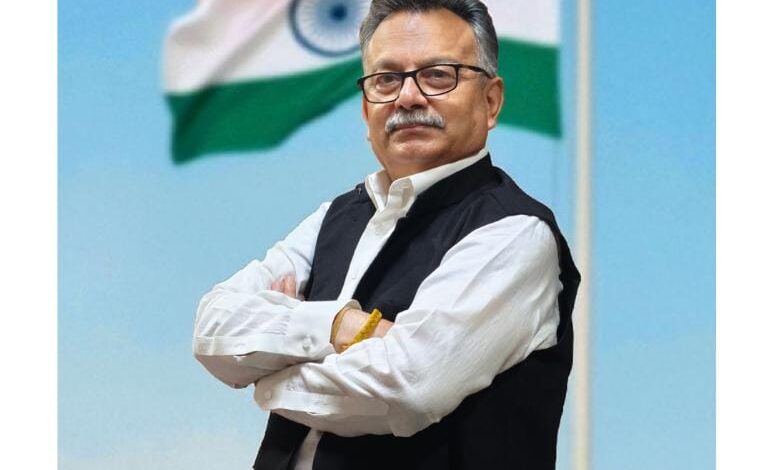
Sukesh C. Khajuria urges centre to frame national policy to ban private practice by medical college faculty to protect public health care.
Jammu, March 24
Sukesh C. Khajuria, a senior social and health activist who has been at the forefront of raising public issues concerning public health, institutional accountability and citizens’ welfare for the past four decades, in a latest representation to the Union Health Minister has urged the Government of India to formulate and implement a comprehensive National Policy prohibiting private practice by faculty members of Government and Private Medical Colleges across India, on the administrative and patient-care model successfully adopted by premier national institutions such as the All India Institute of Medical Sciences (AIIMS) and the Postgraduate Institute of Medical Education and Research (PGIMER).
Sukesh C. Khajuria argued that the right to health and access to timely, affordable and quality medical treatment forms an integral and inseparable facet of the Right to Life guaranteed under Article 21 of the Constitution of India, as expansively interpreted by the Hon’ble Supreme Court of India. The constitutional mandate under Article 21, read harmoniously with Article 47 of the Constitution of India, which enjoins the State to improve public health as a primary duty, casts a positive and enforceable obligation upon the State to ensure equitable and effective access to healthcare services, he added.
In this context, he drew the attention of the Union Health Minister to the judicial pronouncement rendered in Sukesh C. Khajuria v. State of J&K, decided on 14 February 1994 by a Division Bench of the High Court of Jammu and Kashmir, in which a prayer was made, inter alia, for prohibiting private medical practice by Government doctors and for ensuring improved and hygienic medical facilities in public institutions through the said Public Interest Litigation (PIL).
While dismissing the petition, the Hon’ble Court had observed that permitting or prohibiting private practice by Government doctors is essentially a matter of executive policy to be determined by the State Government. The aforesaid judicial observation, with utmost respect, reinforces the position that the issue squarely falls within the policy-making domain of the Government, Khajuria said.
He further stated that the formulation of a structured and uniform National Policy at the Union level would therefore be both constitutionally permissible and administratively appropriate, particularly in light of evolving healthcare demands and the expanded jurisprudence under Article 21 of the Constitution.
Sukesh C. Khajuria pointed out that, however, in a significant number of medical institutions across the country, faculty members engage in private practice concurrently with their institutional responsibilities. Such dual engagement gives rise to serious structural and ethical concerns, namely potential conflict of interest between public duty and private commercial engagement; reduced availability of senior faculty within teaching hospitals during official hours; adverse impact on patient care, particularly for economically weaker sections dependent upon public institutions; dilution of academic commitment, research engagement and mentoring standards; and gradual erosion of public confidence in publicly funded healthcare systems.
Referring to the full-time, non-private-practice model followed at AIIMS and PGIMER, Chandigarh, he noted that it has demonstrated enhanced institutional efficiency, accountability, research productivity, academic excellence and uninterrupted patient care.
“The exclusive professional dedication of faculty to institutional service ensures optimal utilization of public resources and reinforces public trust in tertiary healthcare institutions. Medical colleges—whether Government or Private—function under statutory recognition and regulatory oversight and often benefit from public concessions, land grants, fiscal incentives and institutional affiliations. In such a regulatory framework, it is constitutionally consistent and administratively rational to mandate that faculty members devote their professional services exclusively to institutional obligations in the larger public interest,” Sukesh C. Khajuria wrote.
Advocating a uniform National Policy prohibiting private practice, coupled with rationalized service conditions, competitive remuneration, transparent performance appraisal mechanisms and merit-based incentives, he stated that such measures would strengthen compliance with constitutional obligations under Articles 21 and 47, promote ethical medical conduct and institutional discipline, enhance accessibility, continuity and quality of healthcare services, and advance the constitutional vision of equitable and affordable public health delivery. Such reform would constitute a progressive step toward actualizing the constitutional promise of a dignified life and accessible healthcare for all citizens.
It is further respectfully submitted that the effective implementation of such a policy would also require a rational and equitable restructuring of the service conditions of medical faculty. In this regard, it is proposed that the pay, allowances, service benefits and institutional perks of faculty members serving in Government Medical Colleges across the country be suitably enhanced and brought broadly at par with those prevailing in premier national institutions such as AIIMS and PGIMER, in lieu of the proposed prohibition on private medical practice. Such a measure would be consistent with the constitutional principle of “equal pay for equal work” flowing from Article 14 of the Constitution of India. Ensuring parity in remuneration and service conditions would promote fairness in public employment and encourage full-time professional commitment to teaching, research and patient care within institutional settings.
He submitted that the Government of India, being the highest executive authority responsible for national policy-making in the field of public health, is uniquely positioned to undertake this important reform. A policy framework inspired by the guiding governance principles of “Nation First” and the civilizational ethos of “Nagrik Devo Bhava” — which places the citizen at the centre of public administration — would further strengthen the commitment of public institutions to deliver ethical, accountable and citizen-centric healthcare services.
Sukesh C. Khajuria called for a comprehensive policy review and structured stakeholder consultation process with a view to framing and implementing a National Policy in this regard in the paramount interest of public health, institutional integrity and constitutional governance.