‘Pot Calling the Kettle black’: FIR Against Rahul Gandhi: A political manoeuvre by BJP to consolidate it’s upper caste Hindu votes and target Muslims ahead of Uttarakhand polls?
‘Pot Calling the Kettle black’: FIR Against Rahul Gandhi: A political manoeuvre by BJP to consolidate it’s upper caste Hindu votes and target Muslims ahead of Uttarakhand polls?
S.M.A. KAZMI
Dehradun, Aug 31
In an interesting turn of events, an FIR has been registered against Leader of Opposition and Congress leader Rahul Gandhi in Haldwani under the Scheduled Castes and Scheduled Tribes (Prevention of Atrocities) Act, 1989. The case follows Gandhi’s demand for action against BJP/RSS workers allegedly involved in a “purification ritual” at the venue where Congress president Mallikarjun Kharge addressed a rally in Haldwani on August 8.
The political developments surrounding the controversy point towards a possible strategy by the ruling BJP to use the issue to consolidate its upper-caste Hindu support base ahead of the Uttarakhand Assembly elections due in early 2027.
The controversy could perhaps have died down after BJP president and Union Health Minister J.P. Nadda expressed regret in the Rajya Sabha when Kharge raised the issue and alleged that a “purification ritual” had been conducted at the venue because he was a Dalit. However, the Uttarakhand BJP leadership chose to keep the controversy alive and subsequently escalated it into a larger political confrontation.
Uttarakhand BJP president Mahendra Bhatt, who is also a Rajya Sabha member, defended the ritual, arguing that alleged “anti-Sanatan” slogans had been raised during the Congress rally. He claimed that the venue was a holy place where the annual Ramlila is organised.
Chief Minister Pushkar Singh Dhami also endorsed Bhatt’s position. However, after Rahul Gandhi addressed a press conference on August 29 and demanded action from Prime Minister Narendra Modi against those involved in the ritual, Dhami offered another explanation. He alleged that “Jihadi slogans” had been raised at the Kharge rally and that this was the reason for the “purification” of the venue.
Dhami also rejected the allegation that the ritual had anything to do with Kharge’s caste, arguing that Mallikarjun Kharge’s caste identity was not widely known in Uttarakhand.
By introducing the allegation of “Jihadi slogans” into the controversy, the Chief Minister appeared to be pursuing two political objectives simultaneously. On the one hand, the BJP leadership sought to defend the controversial ritual and retain the support of its traditional upper-caste Hindu constituency. On the other, it revived the Chief Minister’s familiar political discourse around various forms of alleged “jihad”, a theme that has repeatedly been used by the Uttarakhand BJP to mobilise Hindu sentiment and target what its opponents describe as an anti-Muslim political narrative.
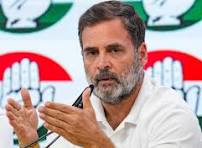
For the BJP, the controversy comes at a time when the Congress, particularly Rahul Gandhi, has intensified its campaign on issues relating to caste discrimination and Dalit rights. Gandhi has increasingly attempted to portray the BJP as insensitive towards Dalits and other marginalised communities. The decision to register an FIR against him could therefore also be seen as an attempt to politically counter him and slow down the momentum of this campaign.
It is unlikely that a decision with such potentially significant political consequences was taken by the Uttarakhand leadership without consultation with the BJP’s central leadership. The registration of the FIR against the Leader of Opposition in Parliament has transformed what began as a local controversy into a wider political confrontation between the BJP and the Congress.
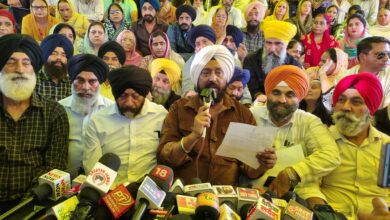
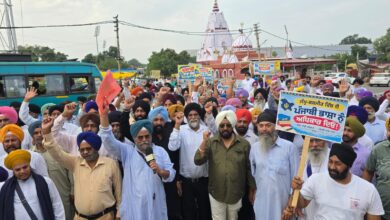
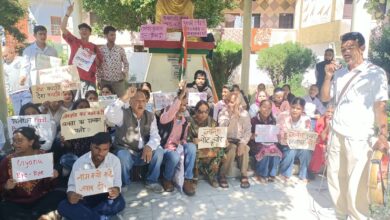
The development has already created a political stir in Uttarakhand. Senior Congress leaders have condemned the FIR and several of them have approached police stations demanding action against those who performed the alleged “purification ritual”.
Suryakant Dhasmana, vice-president of the Uttarakhand Congress, who submitted a memorandum to the Director General of Police, questioned the Chief Minister’s allegation regarding the raising of “Jihadi slogans” at Kharge’s August 8 rally.
“The Chief Minister has the entire intelligence and security machinery at his disposal. He should produce evidence to show that such slogans were raised,” Dhasmana said.
Indresh Maikhuri, secretary of the Uttarakhand CPI(ML), who has been at the forefront of an agitation seeking justice for Ketan Lal, a Dalit youth killed in Tehri district in June this year, alleged that the controversy reflected a wider political attempt by the BJP/RSS to ignore or dilute atrocities against Dalits and minorities.
He alleged that the police and administration, under pressure from the ruling establishment, had attempted to weaken the case relating to the killing of Ketan Lal because of the influence of a powerful upper-caste lobby.
“We have seen that whether it was the murder of Ketan Lal or the killing of Jagdish Raj in 2022, the Chief Minister, who is quick to take cognisance of even frivolous communal issues, did not speak out,” Maikhuri said.
The political significance of the controversy cannot be ignored in a state where Scheduled Castes constitute nearly 23 per cent of the population. It remains to be seen how the competing narratives of caste discrimination, religious identity and communal polarisation will influence the political atmosphere ahead of the 2027 Assembly elections.
According to the complaint filed in Haldwani, Amit Kumar, a resident of Jawahar Nagar and a member of the Shri Ram Sena Dharmarth Seva Nyas, claimed that he was present during what he described as a “ritual and cleanliness drive”. He alleged that remarks made by Rahul Gandhi during a press conference in Delhi on August 29 hurt the sentiments of members of the community.
Kumar accused Gandhi of portraying those associated with the ritual as practising “untouchability” and being “anti-Dalit”.
In his complaint, Kumar stated that he belongs to the Scheduled Caste community and claimed that people from different sections of society, including members of Scheduled Castes, participated in the ritual. He maintained that the exercise had no connection with Congress president Mallikarjun Kharge’s caste.
The FIR has been registered under various provisions of the Bharatiya Nyaya Sanhita relating to the promotion of enmity between groups and deliberate acts intended to outrage religious feelings. Provisions of the Scheduled Castes and Scheduled Tribes (Prevention of Atrocities) Act, 1989, have also been invoked.
The controversy has thus moved far beyond the question of what exactly happened at a Ramlila ground in Haldwani after a Congress rally. It has now become a test of competing political narratives: the Congress seeking to frame the episode as an instance of caste prejudice and discrimination, and the BJP portraying the controversy as an attempt to misrepresent a religious ritual and hurt Hindu sentiments.
With the 2027 Assembly elections gradually coming into view, the Haldwani controversy may prove to be an early indication of the kind of political and social fault lines on which the next electoral battle in Uttarakhand could be fought.