Black Turmeric Offers New Hope for Hill Farming
An alternative crop could help farmers tackle wildlife damage and diversify their income.
Black Turmeric Offers New Hope for Hill Farming
An alternative crop could help farmers tackle wildlife damage and diversify their income.
Prem Prakash Upadhyay ‘Natural’
Bageshwar, Oct 15
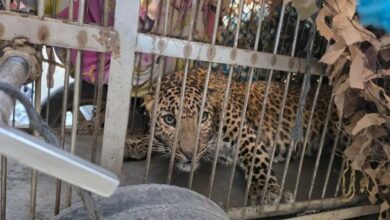
Farming in the hills of Uttarakhand is no longer just a matter of hard work and favourable weather. Crop damage by wild animals, rising cultivation costs and limited access to markets have pushed farmers into a serious crisis. In many areas, months of hard work can be destroyed overnight. Finding alternative crops and exploring new agricultural opportunities have therefore become essential to sustaining rural livelihoods.
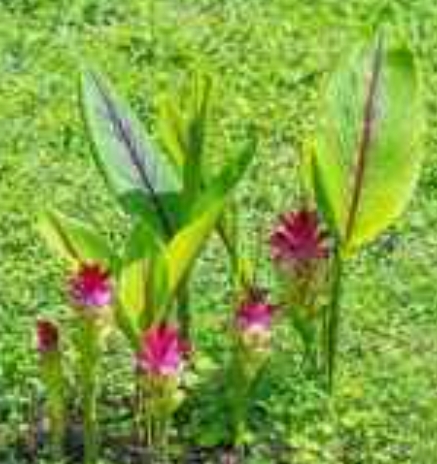
An experiment with black turmeric cultivation in Paladichhina, in the Kafligair region of Bageshwar district, offers a ray of hope. Progressive farmer Sunder Singh Janauti began cultivating the crop with around 20–25 kilograms of seed. According to his experience, the local climate is suitable for its cultivation, and the initial results have been encouraging. His initiative highlights the potential of selecting crops suited to the region’s climatic conditions to improve farmers’ incomes.
Black turmeric is valued for its potential applications in traditional medicinal preparations, cosmetic products and scientific research. Depending on quality, its market price is reported to range between ₹500 and ₹900 per kilogram. However, this is a potential market price, not a guaranteed return. Actual profitability will depend on yield, quality, the availability of buyers and an effective marketing network.
The significance of this experiment extends beyond the prospect of higher prices. One of the major challenges facing hill agriculture is the vulnerability of conventional crops to wildlife damage. Exploring alternative crops suited to local conditions could help farmers diversify their agricultural practices and potentially reduce their exposure to losses. However, black turmeric should not be considered a proven solution to wildlife-related crop damage without scientific assessment of animal behaviour and actual crop losses under local conditions.
Janauti has also supplied seeds to the Agriculture Department and voluntary organisations to encourage other farmers to explore black turmeric cultivation. This is an important step towards sharing practical experience and expanding the scope of agricultural innovation in the hills. An individual farmer’s experiment can become a model for wider adoption only when other cultivators have access to reliable information about cultivation techniques, costs and marketing opportunities.
However, introducing a new crop alone will not be enough. Farmers need quality planting material, scientific guidance, technical training and access to dependable markets. The Agriculture Department should assess the crop’s suitability under local conditions, its yield per unit of land, cultivation costs and actual sale prices. Based on these findings, interested farmers could be encouraged to undertake small-scale trials before expanding cultivation.
Addressing wildlife-related crop losses remains equally important for the survival of hill agriculture.
Farmers need a system in which they do not bear all the risks themselves and receive a fair return for their labour.
The black turmeric experiment in Paladichhina may be a small but significant step towards this larger transformation. Strengthening the hill economy requires such initiatives to go beyond newspaper headlines. Their outcomes must be scientifically evaluated, and successful models should be extended to other suitable areas.
Hill agriculture can survive only when farmers have a reasonable assurance of receiving a fair and reliable return for their hard work. Alternative crops such as black turmeric offer hope, provided that experimentation is supported by science, market access and effective government assistance.