
Mohit Negi’s cinematic journey showcases Himalayan grandeur
Mohit Negi’s cinematic journey showcases Himalayan grandeur
S.M.A. KAZMI
Dehradun, February 27
From a modest government school in Ghimtoli village in Rudraprayag district of Garhwal to documenting the spiritual and cultural grandeur of the Himalayas, Mohit Negi’s journey is a compelling story of vision, perseverance, and purpose at a young age.
A filmmaker deeply rooted in the soil of Uttarakhand, Mohit Negi has emerged as a distinctive voice in documentary and promotional cinema, collaborating with the Uttarakhand Tourism Development Board, Indian National Trust for Art and Cultural Heritage (INTACH) and contributing to projects aligned with the World Tourism Organization (UNWTO).
Early Roots: A Rural Beginning
Educated in the village government school in Ghimtoli, his native village, Mohit’s formative years were shaped by limited resources but enriched by immense cultural wealth. Growing up amidst Uttarakhand’s traditions, folklore, and sacred landscapes, he developed a deep sensitivity toward the stories of his homeland. What began as curiosity gradually evolved into a mission—to visually document and promote the heritage of ‘Devbhoomi’.
Through dedication and self-learning, Mohit carved an independent path in filmmaking. He mastered cinematography, sound, editing, scripting, and direction—creating not merely films, but powerful narratives of identity, belonging, and preservation.
Kartik Swami: A Spiritual Peak, A Cinematic Calling
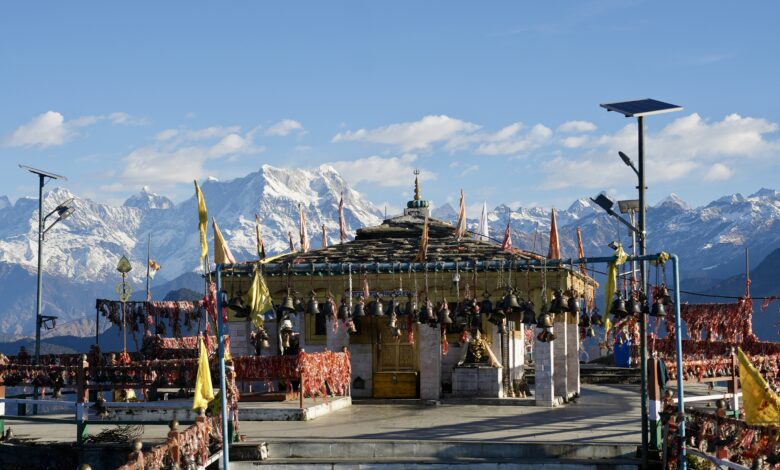
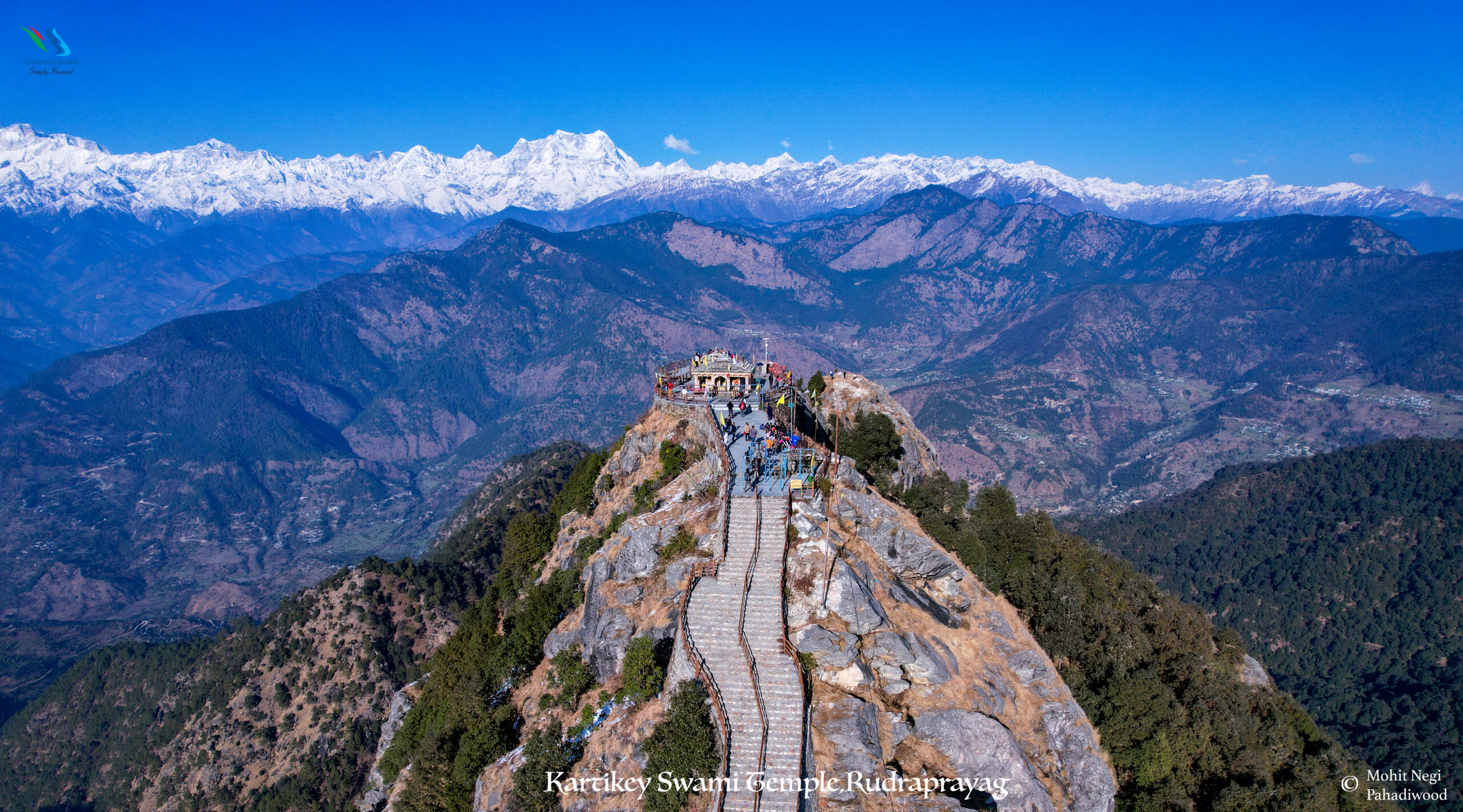
One of Mohit’s most significant promotional works centers on the revered Kartik Swami Temple, located in Rudraprayag district at an altitude of approximately 3,050 meters above sea level on the majestic ‘Krounch’ (Kraunch) mountain overlooking his native village.
The temple holds exceptional spiritual significance—it is the only temple in North India where Lord Kartikeya is worshipped in his child form.
“।। देव सेनापते स्कंद, कार्तिकेय भवोद्भव,
कुमार गुह गांगेय, शक्तिहस्त नमोस्तु ते ।।”
According to mythology, Lord Kartikeya, the elder son of Lord Shiva, arrived here in anger and renounced his flesh, manifesting in skeletal form on ‘Krounch’ mountain. It is believed that on the auspicious occasion of Vaikuntha Chaturdashi, Lord Shiva and Goddess Parvati visit their son at this sacred peak.
Thousands of devotees gather annually to seek blessings. couples praying for progeny light standing lamps, believing Lord Kartikeya blesses them with children.
Mohit’s documentary on the Lord Kartikeya who is known as ‘Murugan’ in the south India drew wide appreciation as it helped ,devotees from deep South to know more about the temple in the Himalayas and encouraged them to visit the revered site.
Every June, a ten-day ‘Mahayagya’ is organized at the temple. On the ninth day, a grand ‘Jal Kalash Yatra’ is conducted—water is ceremonially collected from a sacred pond located on the rugged mountain behind the temple and offered to the deity in a majestic procession witnessed by devotees from across the country and abroad.
Since 2023, a new spiritual tradition has been introduced at the temple—the 108 Valampuri Shankh Puja and Kalash Sthapana, performed by Shivacharyas from South India with active support from the Uttarakhand Tourism Development Board.
During this ceremony:
- Heads of six Kartikeya monasteries from South India ascend Krounch mountain.
- 108 sacred ‘Valampuri’ conches are ritually worshipped.
- Kalash installation and ceremonial exchange of garments are performed.
- Tamil temple music and Sanskrit chanting create a deeply immersive spiritual atmosphere.
On May 15, 2024, the ritual was performed again, attended by hundreds of devotees from South India. The temple complex and pathway were adorned with vibrant flowers and illuminated with modern lighting from the dharamshala to the sanctum. Food and prasad were distributed to all attendees after the ceremony.
Through his independent promotional films and collaborations with Uttarakhand Tourism, Mohit captured not only the rituals but also the transcendental spirit of Kartik Swami. His visuals helped transform this remote Himalayan shrine into a globally recognized spiritual destination, significantly enhancing its tourism visibility.
Preserving Living Heritage: ‘Pandava Nritya’
Beyond temples, Mohit has actively documented Uttarakhand’s intangible cultural heritage. His independent documentary on ‘Pandava Nritya’, supported by INTACH, stands as a cultural milestone.
‘Pandava Nritya’ is not merely a dance form; it is a living oral tradition rooted in the Mahabharata. Performed across Garhwal’s villages, it blends devotion, storytelling, music, ritual theatre, and community participation.
His documentary preserves:
- Oral narratives passed down through generations
- Ritualistic performance traditions
- Traditional costumes and musical instruments
- The socio-cultural relevance of the art form in contemporary society
By documenting ‘Pandava Nritya’, Mohit ensured that this fragile yet vibrant tradition reached audiences beyond remote mountain villages—engaging academics, policymakers, and cultural enthusiasts alike.
His long-term objective is to support efforts toward listing ‘Pandava Nritya’ under UNESCO’s Intangible Cultural Heritage framework, similar to Ramman, the Garhwali ritual theatre tradition recognized in 2007. Through research and documentation, he aims to draw the attention of government authorities and cultural institutions toward preserving this classical heritage.
Sacred Landscapes & Global Platforms
Mohit’s lens has also captured the iconic Himalayan shrines of:
- Kedarnath Temple
- Badrinath Temple
His work portrays not only the architectural magnificence of these temples but also the emotional essence of pilgrimage—the journey of faith across challenging terrain, harsh weather, and unwavering devotion.
Additionally, he created a documentary aligned with the World Tourism Organization for the Jim Corbett Heritage Village in Kaladhungi, highlighting sustainable tourism, rural heritage, and ecological balance in the region historically associated with Jim Corbett.
Through these projects, Mohit effectively bridges:
- Faith and film
- Tourism and tradition
- Documentation and development
- Local identity and global recognition
A Filmmaker with a Mission
Mohit Negi’s journey is not merely a story of personal success; it reflects the broader evolution of regional storytelling in Uttarakhand. From a rural classroom in Ghimtoli to collaborations with national and international institutions, he represents a new generation of grassroots filmmakers reshaping how the Himalayan state is perceived and understood.
His cinema does not simply promote destinations—it interprets them. It does not merely record rituals—it preserves collective memory. In doing so, it strengthens the cultural and spiritual economy of Uttarakhand.
Mohit has also undertaken preliminary research and documentation for the upcoming Nanda Raj Jaat Yatra (2026–27), the grand Himalayan pilgrimage that proceeds from the villages of the middle Himalayas to the higher Himalayan regions of Chamoli district in Garhwal, Uttarakhand. His early groundwork reflects his enduring commitment to preserving and presenting Uttarakhand’s sacred traditions with authenticity and cinematic depth