Arrest of ‘Mohammed Deepak’ Raises Many Unanswered Questions
Arrest of ‘Mohammed Deepak’ Raises Many Unanswered Questions
S.M.A. KAZMI
Dehradun, Oct. 2
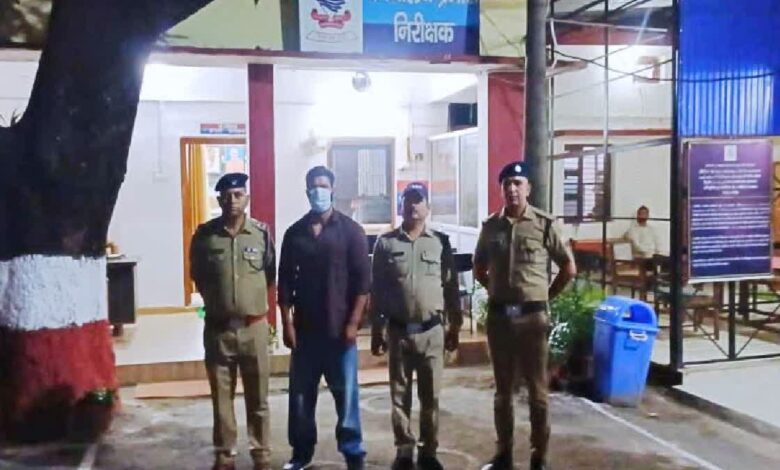
The arrest of ‘Mohammed’ Deepak, a gym owner from Kotdwar in Pauri Garhwal, on October 1—the eve of Gandhi Jayanti—for allegedly abusing and threatening a businessman has raised several unanswered questions about the Uttarakhand Police’s handling of similar cases and what critics describe as a glaring disparity in its approach.
‘Mohammed Deepak’ first came into the limelight after confronting members of the Bajrang Dal over their alleged harassment of a Muslim shopkeeper on January 26 this year. Following the incident, he faced criminal cases, open threats and, eventually, a gag order from the Nainital High Court. He finally obtained interim relief from the Supreme Court in August.
The contrasting approaches of the Uttarakhand Police are particularly evident in the present case. According to the police, Deepak Kumar alias ‘Mohammad Deepak’ was arrested as a preventive measure on the apprehension of a breach of peace and disturbance of law and order. His arrest followed a complaint lodged by businessman Sanjeev Tonk at Kotdwar Kotwali on October 1, alleging that Deepak behaved rudely with him, abused him and threatened to kill him. The two had argued on a social media post regarding the demolition of a portion of Shahi Mosque at Ujjain in Madhya Pradesh. Sanjeev Tonk alleged that Deepak abused and threatened to kill him.
A case was initially registered under Sections 351(2) (criminal intimidation) and 352 (intentional insult with intent to provoke a breach of peace) of the Bharatiya Nyaya Sanhita (BNS).
The more pertinent question confronting the Pauri Garhwal Police in particular, and the Uttarakhand Police in general, is what action has been taken against the large number of Hindutva groups that have allegedly issued open threats to Muslims and Christians in different parts of the state.
These groups had gathered in Kotdwar in January 2026 after Mohammed Deepak intervened when an elderly Muslim shopkeeper was allegedly harassed by members of one such group over the use of the word ‘Baba’ in the name of his shop. During the argument, Deepak Kumar identified himself as Mohammed Deepak, drawing the ire of members of the BJP-RSS ecosystem and supporters of the ruling party.
Since then, he has been fighting what he describes as an onslaught through the local police station, at the High Court and, ultimately, the Supreme Court, seeking relief after standing up for an elderly Muslim shopkeeper who was allegedly being intimidated by a group.
The Kotdwar Police claimed that, during the investigation into the recent case, it examined CCTV footage as well as available photographs and videos and subsequently added Sections 196 (promoting enmity between different groups) and 115 (voluntarily causing hurt) of the BNS. The police said that “the evidence prima facie revealed that the accused abused the complainant and also threatened him.”
The police claim that video evidence was found to substantiate the allegations against Deepak raises another question: why has similar evidence not resulted in comparable action against members of various ‘Dals’ and ‘Senas’ who, critics allege, have openly threatened and assaulted Muslims, trespassed into private premises and subsequently publicised their actions on social media?
Such incidents have been reported from different parts of Uttarakhand. Critics of the police allege that, despite repeated complaints, action against members of such groups has often been slow or inadequate, and in some instances the police have been accused of appearing to act in their favour.
The police further claimed that the investigation had brought to light Deepak’s alleged involvement in “various social disputes” in the past that had “affected peace and law and order in the area.” It also claimed to have received information about activities involving the gathering of people and the creation of a “tense atmosphere.”
The police statement further said: “Considering the available evidence, the activities of the accused and the possibility of disturbance to peace and law and order in the area, Kotdwar Police took prompt and effective action and arrested Deepak alias Akki alias ‘Mohammad Deepak’ under Section 170 of the BNSS.”
Section 170 of the Bharatiya Nagarik Suraksha Sanhita (BNSS) provides for preventive action where the police have reason to believe that a person is planning to commit a cognisable offence and that the offence cannot otherwise be prevented.
The Pauri Police said it would continue to take legal action against those attempting to “take the law into their own hands”, issue threats, spread animosity or disturb peace and law and order.
However, critics have questioned why the Kotdwar Police did not display similar alacrity when hundreds of Bajrang Dal members allegedly gathered outside ‘Mohammed Deepak’s’ gym in January 2026, where he was allegedly abused and threatened with violence. Cases were registered, but critics allege that no tangible action followed. They attribute this, in part, to the perceived political proximity of such groups to the ruling establishment.
“Maintaining peace, security and harmony in the district is the police’s highest priority,” the police statement said. The police also conducted a flag march in the Kotdwar Municipal Corporation area on October 1 as a security measure.
Meanwhile, members of the local traders’ body, which is perceived to have strong links with the ruling BJP, reportedly protested and demanded Deepak’s arrest. People were seen allegedly abusing and threatening him outside the police station while he was in police custody.
Over the past several decades, Muslim organisations, Left parties and civil society groups have submitted numerous representations and organised protests urging the police to uphold their constitutional duty to protect minorities from what they describe as repeated public abuse, intimidation and threats by such groups and individuals. They allege that, despite such representations, only FIRs are registered after considerable pressure, with little concrete action thereafter.
The Left parties, Uttarakhand Insaniyat Manch and Muslim Sewa Sangathan have made numerous representations and met senior police officials, urging them to assess the situation and take preventive measures. Critics say, however, that little has changed on the ground and that such groups have become increasingly emboldened in targeting minorities.
With the state Assembly elections only a few months away, concerns have also been expressed that incidents involving communal polarisation could increase. Critics of the ruling establishment argue that political mobilisation around the Hindu-Muslim divide has played a significant role in electoral politics both nationally and in Uttarakhand, particularly during the last Assembly elections.