
Is forest department’s “Living with Leopard” initiative introducing spiked neck collars for women, a solution to man-animal conflict in Uttarakhand hills?
Is forest department’s “Living with Leopard” initiative introducing spiked neck collars for women, a solution to man-animal conflict in Uttarakhand hills ?
Prem Prakash Upadhyay “Natural”.
Bageshwar, Jan 29
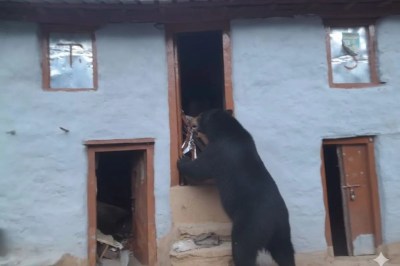
Across Uttarakhand’s hill districts Pithoragarh, Bageshwar, Pauri, Uttarkashi, Nainital, Almora and Chamoli—the growing intrusion of wild animals is no longer a distant environmental issue. It has evolved into a profound human crisis, threatening lives, livelihoods and the fragile social fabric of mountain communities.
Leopards, tigers, bears, wild boars and monkeys now roam dangerously close to villages as fear has become an everyday companion of the humans in the hills. When women leave home to collect fodder, anxiety settles over entire households. Farmers hesitate before stepping into their fields. Children walk to school with a quiet dread shadowing every step. This fear is not imagined as it has come from repeated tragedies that have scarred these regions over the past decades.
Yet, the official response remains painfully predictable. After each fatal encounter come routine announcements of compensation, brief patrolling drives, and solemn assurances. Soon after, silence returns until the next incident forces attention once again. This cycle of reaction without resolution has only deepened public despair.
It must be stated clearly: neither the forests nor the wild animals are the culprits. The real responsibility lies with a flawed development model that hastened the construction of roads, buildings and settlements, while neglecting the preservation of wildlife corridors, natural water sources and feeding grounds etc. As forests shrank and ecosystems fragmented, animals were pushed toward human habitations in search of survival. This conflict is not accidental, it is the predictable outcome of years of policy neglect, administrative apathy and short-sighted planning.
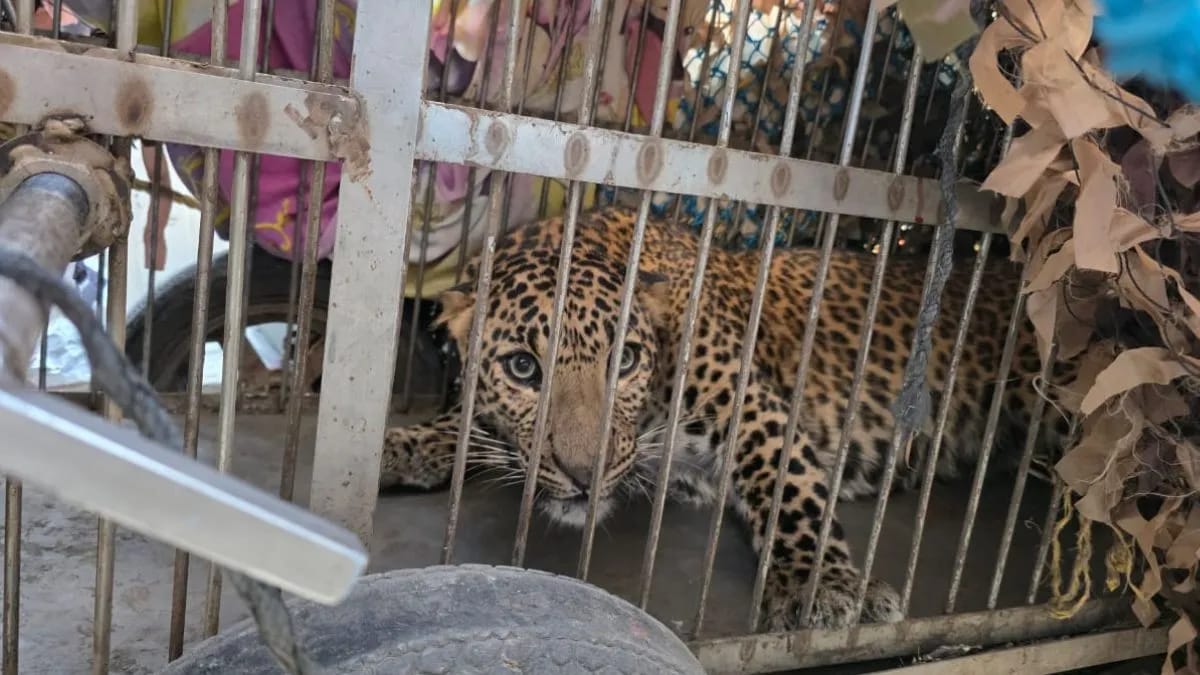
Against this troubling backdrop, the Forest Department’s “Living with Leopard” initiative—introducing spiked neck collars for women—has drawn attention. Inspired by experiments in Maharashtra, the measure may save a few lives. But it is not a complete solution. A society cannot accept a reality where hill women must armour themselves simply to carry out daily tasks. Protection cannot come at the cost of dignity.
What Uttarakhand urgently needs is a long-term, scientific and humane strategy. Effective fencing in high-risk zones, restoration of disrupted wildlife corridors, modern wildlife management practices, and meaningful involvement of local communities, must form the backbone of the policy. Compensation systems must be swift, transparent and humane. Alternative livelihood options are no longer optional, they are essential. And where human life is under immediate threat and the administration must show the courage to act decisively, without hesitation.
Wild animals are not criminals. They, too, are fighting for survival, just as humans seek safety and security. Nature, like society, demands balance. If this imbalance is allowed to persist, the crisis will no longer remain confined to forests and remote villages. It will seep into towns and cities.
If decisive action is delayed further, each new day in the hills will bring not just fear, but fresh grief and the state will continue to pay for its silence with the lives of its people.