

Housing policy coupled with political will can resolve the residential crisis of settlements like Banbhoolpura, Bindu Khatta, and Rishikesh
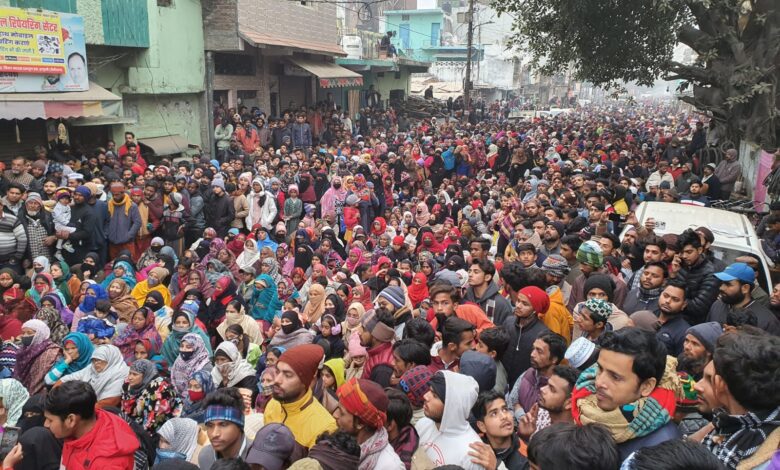
Housing policy coupled with political will can resolve the residential crisis of settlements like Banbhoolpura, Bindu Khatta, and Rishikesh
By Islam Hussain
Following the Supreme Court hearing on February 24 and its interim order in the Banbhoolpura railway land case, the outcome of the high-level meeting convened by the Nainital district administration remains unclear. What is known, however, is that the administration acknowledged the sensitivity of the matter and initiated coordination among concerned departments to deliberate on a future course of action.
A meeting was held at the camp office in Haldwani under the chairmanship of District Magistrate Lalit Mohan Ryal. Officials from the Indian Railways, Municipal Corporation, District Development Authority, Rural Development Department, and other agencies participated. Special emphasis was placed on the timely and effective implementation of the Supreme Court’s directives. At the time of the meeting, the official copy of the interim order had not yet been received. The District Magistrate instructed all departments to establish coordination once the certified copy of the court order is obtained and to ensure fulfilment of assigned responsibilities within the stipulated timeframe. Any negligence in this matter, it was stated, would not be tolerated.
After this judicial development, earlier claims, evidences, and arguments—regarding the legality of lease land, residential rights, land allotments, purchase documents, or ownership transfers—have largely lost relevance. What now matters is what the Court has observed during hearings since January 2023 and in its recent proceedings.
The Court has accepted the Railway’s claims, which include plans to develop railway infrastructure in Haldwani on an international scale, reportedly larger in ambition than facilities in the state capital, Dehradun. This raises questions, particularly since Lalkuan—located only about 15 kilometers from Haldwani—has already been developed as the state’s largest railway facility hub, yet appears insufficient in the Railways’ assessment.
Parts of the land on which Banbhoolpura stands belonged to the state government, which has decided to transfer this land to the Railways. Residents who purchased land in the area and possess legal documents or leases are expected to receive compensation.
Questions such as the concrete blueprint for railway expansion or why ten acres of land acquired by the Railways in 2007 remain unused are no longer central to the discussion. The immediate objective has effectively become the clearance of Banbhoolpura for railway facilities.
The primary issue now is the rehabilitation of Banbhoolpura’s residents. The Court has directed consideration of housing arrangements based on economic eligibility, and the government is expected to present a concrete proposal and action plan at the next hearing.
The most critical challenge within this proposal is land availability. Earlier, the Court suggested that affected residents be resettled within a five-kilometer radius. This condition has become a major obstacle. Authorities now propose rehabilitation under welfare schemes such as the Prime Minister’s Housing Scheme, but a fundamental requirement of such schemes is land ownership in the beneficiary’s name. After the Court’s decision, Banbhoolpura residents have effectively become landless, making them ineligible under existing criteria.
The only viable solution, therefore, lies in the government demonstrating genuine intent. Since the state has already proposed transferring its land in Banbhoolpura to the Railways, it becomes morally and administratively necessary for the government to arrange land for the rehabilitation of approximately 4,500 affected families and develop a planned township for them.
Two possible options exist.
First, the state government recently took possession of nearly 2,000 acres of land belonging to Prag Farm in Udham Singh Nagar after prolonged legal disputes related to land ceiling laws were resolved and appeals by the former owners were dismissed. This land had long been at the center of movements by landless communities demanding redistribution. At one point, there had even been consensus that residents displaced from forest land in Bindu Khatta could be resettled on ceiling-surplus land from large estates such as Prag Farm. Now that the land is under government control, it could be utilized to establish a township for Banbhoolpura residents, treating all affected families equally.
For this, the government should request the Court to relax the five-kilometer restriction and persuade Banbhoolpura residents to move beyond their emotional attachment to Banbhoolpura and Haldwani.
Second, in light of the Court’s decision, the government could formulate a comprehensive land and housing policy aimed at regularizing long-standing settlements—including slums and forest settlements—by notifying their land as revenue land and granting legal status.
Such a policy would benefit residents of numerous settlements, including Bindu Khatta and areas such as Gopuri and Rishikul in Rishikesh. It is important to note that the government had earlier promised to declare Bindu Khatta a revenue village. Announcements made in 2011 and later were recently withdrawn, leading to renewed protests, rallies, and conferences by residents. A similar situation has emerged in Rishikesh, where interim court orders recently triggered rail blockades, demonstrations, stone-pelting incidents, and arrests.
Attempts have also been made to secure housing rights for residents of such settlements through the Forest Rights Act. However, due to the absence of a clear policy framework, implementation plan, and political commitment, the expected outcomes have not materialized, leading to growing distrust among thousands of landless families. The Act alone does not appear capable of resolving such a large-scale housing crisis.
If the government undertakes a serious initiative, regularization demands of settlements such as Bindu Khatta and Rishikul could be addressed, and the housing crisis of Banbhoolpura residents could also be resolved within the same framework.
With the right intent behind a housing policy, regularization of settlements in Bindu Khatta, Bagjala in the Gaulapar region, and many similar areas could grant land and housing rights to thousands across Uttarakhand. Land connected with the Bagwala area could be made available relatively easily for establishing a township for Banbhoolpura residents. Notably, their rehabilitation would require only about 2,000–3,000 acres—modest compared to approximately 10,000 acres in Bindu Khatta and nearly 30,000 acres in Rishikul.
It should also be remembered that since the formation of Uttarakhand, thousands of acres of land—including hundreds of acres in Haldwani alone—have been acquired for public projects. If land can be acquired for development works, forest land can likewise be utilized to address housing needs, build new townships, and support urban expansion. Forest land can no longer be treated as untouchable when human habitation and dignity are at stake.
Otherwise, just as earlier welfare initiatives—from the Twenty-Point Programme to the Indira Gandhi Housing Scheme—failed due to lack of clear land ownership and availability, this directive too risks the same fate. Beyond the solutions outlined above, there appears to be no just, dignified, and humane resolution to the crisis.
(The author is among the senior-most grassroots activists of Uttarakhand. Since the 1980s, he has consistently written on the housing crisis of landless communities. In 1982, he authored a comprehensive report in Nainital Samachar examining all aspects of the landless question in the Terai region; the section on Bindu Khatta was later included in the publication “Twenty-Five Years of Nainital Samachar.” The author has been a government-accredited journalist and has published four books. He is a senior Sarvodyaya leader.)