Mountain awakes to the calls to invite crows during ‘Ghughutiya Tyar’ festival
Mountain awakes to the calls to invite crows during ‘Ghughutiya Tyar’ festival
Prem Prakash Upadhyay “Natural”
Bageshwar, Jan 15
The morning of January 14 in Uttarakhand hills reverberated with cheerful voices of children echoing through villages: “Kaale kauwa kaale, ghughute ki maala kha le.” Inviting crows to come and eat. The call was not part of a game but was the very soul of ‘Ghughutiya Tyar’, a traditional folk festival of Uttarakhand.
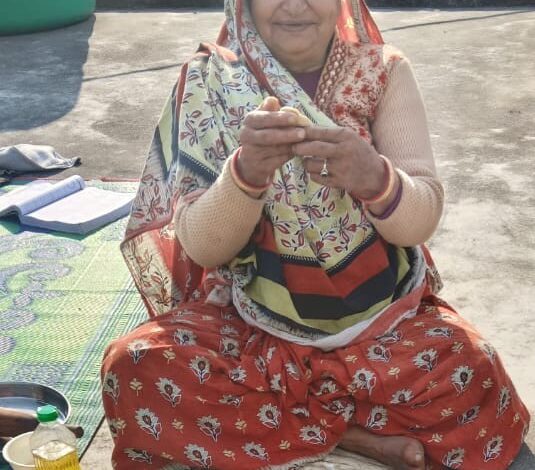
Celebrated alongside ‘Makar Sankranti’, ‘Ghughutiya Tyar’ was not just a festival for hill children, it was the biggest celebration of the year. ‘Ghughutes’, made from flour and jaggery and made into garlands with collective participation of the entire family which defined this festival. On the eve of ‘Sankranti’, hearth fires burned late into the night as families gathered in courtyards and on rooftops, shaping ‘Ghughutes’ together.
For children, the charm of ‘Ghughutiya’ went just far beyond taste. The shapes crafted of ‘Ghughutes’—pomegranate flowers and Jatar for girls, swords and damru (small drums) for boys—gave form to their imaginations. Each child carefully decided in advance how many ‘Ghughutes’ would adorn their garland.
The most distinctive tradition of this festival is its association with the crow. It was believed that the crow must eat the ‘Ghughutes’ first, only then would the family take their meal. In the biting cold of January, children would bathe and set out early in the morning to call the crow. Perhaps it was the only day of the year when the cold was accepted without complaint.
Once the crow had eaten, another “competition” starts—how to preserve the ‘Ghughutes’ for as many days as possible. Some hide their garlands, others bargained with siblings, and eventually the’ Ghughutes’ became the cause of playful quarrels and laughter.
Today, amid mobile phones, television, and modern lifestyles, the vibrancy of ‘Ghughutiya Tyar’ is fading. Migration from the hills has further confined the festival. Yet, ‘Ghughutiya Tyar’ continues to live on in the collective memory of the hill folks —reminding them of a time when festivals were born not from markets, but from relationships and shared labor.
According to a folk legend, there once lived a king named ‘Ghughut’. An astrologer foretold that he would be killed by crows on the morning of ‘Makar Sankranti’. To avert this fate, the king devised a plan. He announced throughout the kingdom that people should prepare special delicacies made of flour mixed with jaggery and send their children to call crows to their homes. The sweets were instructed to be shaped like snakes so that the crows would swoop down on them quickly.
Thus, ‘Ghughutiya Tyar’ is, in essence, the story of a mountain childhood that time has left behind but one that has not been erased from the memories.