Early Integrity to Judicial Decay: Supreme Court lawyer and writer Anil Nauriya on India’s political shifts and Dehradun’s Changing Landscape
Early Integrity to Judicial Decay: Supreme Court lawyer and writer Anil Nauriya on India’s political shifts and Dehradun’s Changing Landscape
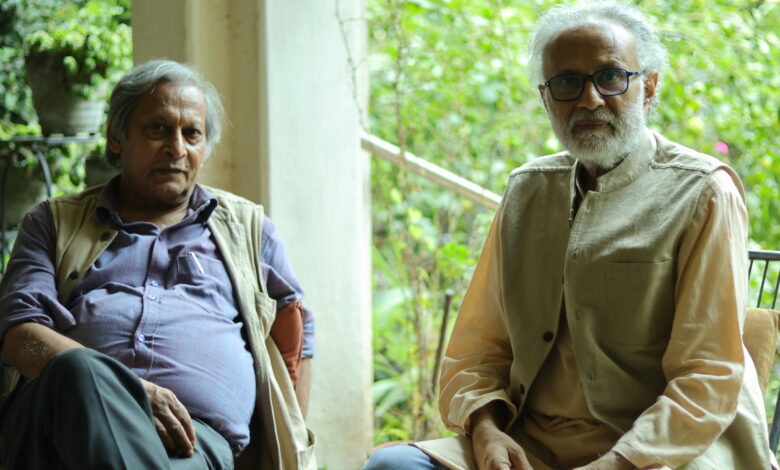
DEHRADUN — In a recent episode of the podcast series Cross Road Conversations hosted by The Northern Gazette, veteran journalist SMA Kazmi sat down with senior Supreme Court advocate, scholar, and author Anil Nauriya.
The conversation took place at ‘Rain Basera’—the historic Tyagi Road residence of Nauriya’s grandparents, the legendary freedom fighter and former Union Minister Mahavir Tyagi, and his wife Sharmda Tyagi, Dehradun’s first female legislator. Once considered the political nerve center of Dehradun, the house served as the backdrop for a deep dive into India’s political evolution, historical clarifications, and a sharp critique of modern governance and judicial institutions.
The Vanished Ethos of Electoral Accountability
Reflecting on the 125th birth anniversary of Mahavir Tyagi, Nauriya pointed out the stark contrast between early Indian political decency and today’s multi-crore election expenditures.
He shared a well-documented historic anecdote regarding his grandmother, Sharmda Tyagi. Following her election victory in 1937, she meticulously calculated her campaign expenses and returned the remaining balance of ₹150 directly to Jawaharlal Nehru.
Nauriya also recalled a story recorded by former Rajasthan Governor Raghukul Tilak. Mahavir Tyagi once refused a cash donation from a prominent industrialist, fearing it would compromise his freedom of speech in Parliament. When the industrialist insisted, Tyagi accepted it strictly as a loan. Following the elections, he returned the packet completely unopened.
“In those days, leaders had already established themselves through years of grassroots public service,” Nauriya observed. “They didn’t need fleets of cars and helicopters to introduce themselves to voters, which is why expenses were minimal.”
Mahatma Gandhi’s Penance and the ‘Tyagi Police’
The discussion highlighted the unique, brutally honest relationship between Mahavir Tyagi and Mahatma Gandhi. Nauriya recounted a famous incident in Mussoorie where Gandhi mistakenly criticized Tyagi’s Congress volunteers during a prayer meeting, based on false rumors that they were turning away poorly dressed rickshaw pullers.
Upon Tyagi’s protest, Gandhi set up a fact-finding commission consisting of Brijkrishna Chandiwala and Pyarelal. When the commission reported that no such discrimination had occurred—and that the rickshaw pullers were actually thriving financially due to the meetings—Gandhi publicly repented during his next sermon. When Tyagi later went to greet him, Gandhi humbly asked, “Have you forgiven your sinner?”
Nauriya also shed light on the ‘Tyagi Police’ raised by his grandfather during the communal violence of Partition in 1947. He clarified that it was not a private or caste-based force, but a secular volunteer group trained systematically in Meerut and later officially gazetted by the United Provinces government under Premier Govind Ballabh Pant and Home Minister Lal Bahadur Shastri. When Tyagi sought Gandhi’s blessings for the force, Gandhi told him he would dance with joy the day he heard Tyagi had martyred himself protecting innocent lives from communal frenzy at Saharanpur chowk in Dehradun.
Setting the Record Straight: The Aksai Chin Debate
Nauriya corrected a widely manipulated parliamentary debate from December 5, 1961, involving Mahavir Tyagi and Prime Minister Jawaharlal Nehru regarding Aksai Chin.
Historically, when Nehru described the barren terrain of Aksai Chin by stating “not a blade of grass grows there,” Tyagi pointed to his own bald head and famously quipped, “No hair grows on my head either, should it be chopped off too?”
Nauriya explained that the interaction happened 10 months before the 1962 war and was conducted in a light-hearted manner, with Nehru even lifting his own cap in response. More importantly, Nauriya provided the critical political context: Chinese Premier Zhou Enlai had previously proposed a bargaining deal offering to recognize the McMahon Line in the Northeast if India conceded Aksai Chin. Tyagi’s statement was a resolute parliamentary rejection of China’s false bargaining counter, emphasizing that India would not legitimize illegal territorial occupation just because the land was barren.
Structural Decay: The Congress Split and Judicial Alignment
Addressing modern politics, Nauriya analyzed the decline of the Congress party, tracing its roots back to the 1969 split. He explained that when Indira Gandhi split the party, the parliamentary wing stayed with her, but the grassroots constructive and Gandhian organizations aligned with Congress (O). This severed Congress’s organic link with rural India, leaving a structural vacuum that the RSS systematically filled through thousands of schools and grassroots penetration.
As a senior Supreme Court advocate, Nauriya offered a scathing critique of the contemporary judiciary, citing “judicial weakness and alignment with the executive” as major catalysts for modern arbitrary governance, such as “bulldozer justice.”
He criticized the trend of “window-dressing judgments”—verdicts that sound progressive but are intentionally delayed to suit executive preferences. He cited the Electoral Bonds case, where the court declared the bonds illegal but left the accumulated funds untouched, and the Maharashtra Assembly case, where the Governor’s actions were labeled unconstitutional, yet no restoration of status quo ante was ordered. Nauriya also slammed the Supreme Court’s handling of human rights cases, historical delays in intervening during public instances of lynching, and the post-retirement Rajya Sabha nomination of a former Chief Justice following the Ayodhya verdict.
The Collapse of Dehradun’s Ecology
The interview concluded with Nauriya expressing deep grief over the environmental degradation of his hometown. Educated at The Doon School and St. Stephen’s College, Nauriya attributed the ecological collapse of the region to the dominance of building contractors in governance.
Critiquing the massive highway expansions and high-rise constructions tearing through seasonal rivers and cutting down thousands of trees between Delhi, Dehradun, and Mussoorie, Nauriya remarked on the tragic irony of modern development:
“The irony is that people will manage to reach here faster, but the very place they are trying to reach will be entirely destroyed. What will we achieve by getting people here quickly if the destination itself is gone?”