Saharanpur Mosque episode: A demolition, a warning and questions Muslims cannot ignore
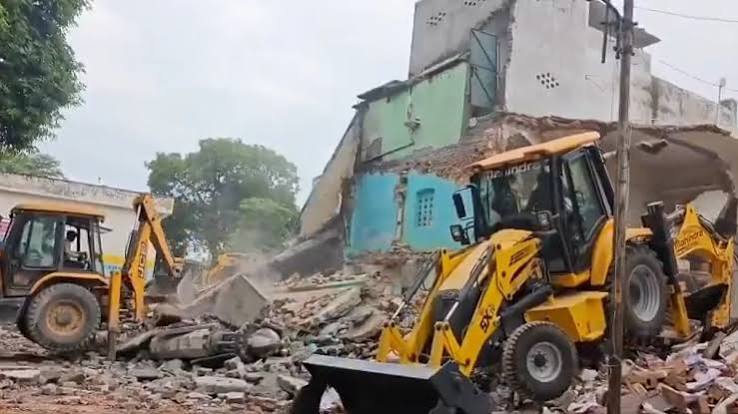
Saharanpur Mosque episode: A demolition, a warning and questions Muslims cannot ignore
Khursheed Ahmed Siddiqui
Dehradun , Sept 6
The demolition of a mosque within the premises of the Saharanpur court complex in the early hours of the morning is not merely a story about the removal of a structure. If reports that the mosque had existed at the site since before 1911 are correct, the episode raises questions that go far beyond Saharanpur.
It raises questions about the limits of administrative power, the effectiveness of elected representatives, the protection of minority religious properties, the functioning of the legal system—and, perhaps most importantly, the preparedness of the community itself.
Muslim representatives sit in Parliament. Political parties that profess secularism remain an important part of India’s political system. Yet when a mosque becomes the subject of an administrative action amid questions concerning its ownership and legal status, the obvious question is:
Where were the institutions that were supposed to protect the citizen’s right to seek justice?
Democracy or the Rule of Administrative Power?
The local Member of Parliament and other elected representatives appear to have been unable to prevent or effectively intervene in the action. This should concern everyone, irrespective of political affiliation.
An elected representative may not possess the legal authority to simply stop an administrative action. But when a disputed religious property is involved, one expects elected representatives to ensure that the affected citizens have access to the legal process and that their grievances receive timely attention.
If an elected Member of Parliament is unable to make his voice effectively heard even when serious questions concerning the ownership and legal status of a religious property are involved, should we not examine whether our democratic institutions are functioning as they should?
The issue is not whether an MP should be able to overrule the administration. The issue is whether the administration, elected representatives and judiciary are functioning within a system in which a citizen can obtain an effective remedy before irreversible action is taken. That is the real democratic question.
The Horse Has Bolted. But Why Was the Stable Door Left Open?
Member of Parliament Imran Masood has reportedly stated that he intends to approach the High Court and that he possesses documents relating to the ownership of the property. If such documents exist, another uncomfortable question arises.
If litigation concerning the matter had already continued for nearly a year and a half, why were all relevant documents not placed before the appropriate court at the earliest possible stage?
If they were placed before the court, why did the dispute apparently reach a point where demolition could take place? And if an effective remedy was not available before the lower court, why was the matter not taken to the High Court earlier? These questions are not intended merely to criticise an individual. They point towards a larger problem.
Political factionalism, social divisions, bureaucratic procedures, legal delays and inadequate coordination can sometimes combine to produce a situation in which everyone begins looking for answers only after the irreversible has happened. And once a historic religious structure has been demolished, a legal victory obtained years later cannot restore what has already been lost. That is why preventive legal action matters.
What Happened to the Land on Which the Mosque Stood?
There is another set of questions that cannot be ignored. If land was acquired by the government for the construction or expansion of the court complex, what happened to the land occupied by the mosque?
Was it included in the acquisition?
Was it excluded?
Was the mosque’s land separately identified?
Was there a separate boundary?
What do the revenue records show?
What do the acquisition proceedings show?
What do the maps and survey records show?
And if the mosque’s status was claimed on the basis of long-standing religious use—sometimes described in legal contexts as Waqf by User—what documentary evidence exists to establish that claim?
Were the relevant records maintained with the appropriate Waqf authorities?
Were they updated?
Were the boundaries properly recorded?
These may appear to be dry questions of revenue law and documentation.
They are not.
In a property dispute, these documents can determine whether a community possesses a legal claim that can be effectively defended.
Our Greatest Weakness May Not Be the Absence of Rights—But the Absence of Records
This is where the Saharanpur episode should become a lesson for the entire Muslim community.
We are quick to issue statements.
We are quick to make videos.
We are quick to organise protests.
We are quick to deliver speeches.
But how many of our religious and community institutions have properly documented the properties under their control?
Take any mosque, madrasa, graveyard or community property.
Can its management immediately produce:
- The original title or ownership documents?
- Historical revenue records?
- Old maps and survey documents?
- Properly certified demarcation records?
- Land-acquisition documents, wherever applicable?
- Waqf registration and related records?
- Evidence of long-standing religious use?
- Previous court orders and litigation records?
- Current entries in revenue and other official records?
- A secure digital archive of all these documents?
If the answer is no, then we need to confront an uncomfortable truth:
A property without organised documentation is vulnerable, regardless of how emotionally important it may be to the community.
No number of speeches can substitute for a title document.
No viral video can substitute for a revenue record.
No protest can substitute for timely legal intervention.
And no political slogan can substitute for a properly prepared case before a court.
We Need Less Reaction—and More Preparation
For decades, much of our response to such incidents has followed the same pattern.
An incident occurs.
Anger spreads.
Videos are released.
Statements are issued.
Political leaders condemn the action.
A delegation meets officials.
A legal case is announced.
And then, after some time, public attention moves elsewhere.
We need to break this cycle.
The question we should be asking is not only:
“What happened?”
It should also be:
“What had we done before it happened?”
Had the property been properly documented?
Had its boundaries been surveyed?
Had revenue records been verified?
Had the Waqf records been updated?
Had earlier court proceedings been monitored?
Had competent lawyers examined the legal position?
Had copies of every important document been preserved securely outside the physical premises?
If the answer to these questions is yes, the community is in a far stronger position.
If the answer is no, then we must accept our share of institutional responsibility.
Constitutional Rights Are Rights—But Rights Must Be Defended Through Law
There is another lesson that must be understood.
Article 25 of the Constitution guarantees freedom of conscience and the right to freely profess, practise and propagate religion, subject to the constitutional limitations specified in the provision.
But constitutional rights do not operate in isolation.
They exist within a legal system.
They are protected through courts, statutes, administrative procedures, evidence and documentary records.
Therefore, merely knowing that the Constitution guarantees religious freedom is not enough.
We must understand how that right is enforced.
When a mosque, madrasa, graveyard or other community property becomes the subject of an administrative dispute, the response must be immediate, organised and legally informed.
The rule of law requires that disputes be addressed according to law and that administrative action remain subject to applicable legal procedures and judicial scrutiny.
The answer to arbitrary action, if arbitrary action is established, is not merely anger.
The answer is evidence, legal strategy and timely recourse to the courts.
The Babri Masjid Should Have Taught Us This
The history of the Babri Masjid dispute is painful and deeply contested. But whatever one’s political or religious position, one lesson should be clear:
Religious-property disputes cannot be left to the last moment.
Once a dispute becomes politically charged and physically irreversible, the possibility of restoring the status quo becomes enormously more difficult.
The lesson, therefore, is not simply to protest after something happens.
The lesson is to prepare before it happens.
Every mosque should have a legal file.
Every madrasa should have a property file.
Every graveyard should have its boundaries documented.
Every important historical document should be digitised.
Every pending dispute should be monitored.
Every adverse administrative order should be examined immediately by competent lawyers.
This is not communal politics.
It is basic institutional responsibility.
Are We Becoming “Second-Class Citizens”—or Are We Failing to Use the Institutions Available to Us?
The phrase “second-class citizen” is frequently used in political discourse. But we must ask a more difficult question. Does a citizen become a second-class citizen because the Constitution denies him rights?
Or can a community sometimes become politically and institutionally vulnerable because it has failed to organise itself sufficiently to exercise the rights that the Constitution provides?
If a citizen’s grievance is ignored, that is a matter of serious concern. If an elected representative’s intervention is ineffective, that deserves scrutiny. If administrative action takes place before an effective judicial remedy can be obtained, the process deserves examination.But we should also ask ourselves:
Did we have the documents?
Did we have the lawyers?
Did we know the legal deadlines?
Did we monitor the case?
Did we act before the crisis became irreversible?
These questions may be uncomfortable. But uncomfortable questions are often the ones that produce meaningful reform.
Time Has Come for a National Property Documentation Mission
Instead of establishing yet another organisation devoted primarily to issuing statements, why not establish a professional, permanent mechanism for protecting community properties?
Such an institution could maintain a national digital archive of:
Mosques | Madrasas | Graveyards | Waqf properties | Community institutions
Each property should have a unique file containing its complete legal history. It should include title documents, revenue records, maps, acquisition records, registration documents, Waqf records, photographs, historical evidence, court proceedings and current legal status.
The original documents should be preserved securely, while multiple encrypted digital copies should be maintained at separate locations. Properties facing litigation or administrative action should be placed under continuous legal monitoring.
A panel of competent lawyers should be available to intervene immediately when necessary. This should not be controlled by any political party. It should not depend upon one MP. It should not belong to one religious organisation. It should be a professional, transparent and legally oriented institutional effort.
Much to Learn from Other Communities
We should also be willing to learn from communities that have successfully preserved their religious and community institutions through strong organisational structures.
The Sikh community, in particular, offers examples of how religious institutions and community assets can be protected through organisation, collective responsibility and institutional discipline.The lesson is not to imitate another community blindly.
The lesson is simple:
Community strength is not created merely by numbers. It is created by organisation.
Organisation requires records.
Records require discipline.
Discipline requires institutions.
And institutions require long-term thinking.
Politics Cannot Do Everything
We should also stop expecting political leaders to solve every problem. An MP cannot personally maintain the records of thousands of mosques. A political party cannot monitor every revenue entry. A religious leader cannot fight every property dispute.
The administration cannot be expected to protect a community’s property interests on behalf of that community. And courts cannot decide a case on evidence that nobody produced. Every institution has its role. The community also has a role. That role is to remain legally aware, institutionally organised and prepared to defend legitimate rights through constitutional means.
There Is Still Time
The Saharanpur mosque should not become merely another headline that disappears after a few days. It should become a wake-up call. We have two choices.
We can wait for the next mosque, the next madrasa, the next graveyard or the next community property to become embroiled in a dispute—and then search desperately for documents. Or we can start today.
Document every property.
Verify every record.
Digitise every important document.
Survey every boundary.
Update every applicable Waqf record.
Monitor every case.
Build a network of competent lawyers.
Train community institutions in basic legal and revenue procedures.
And create a system in which no mosque’s legal history has to be reconstructed after demolition.
Not Just Protest—Preparedness
Politics has its place.
Religious leadership has its place.
Administration has its place.
The judiciary has its place.
But the protection of legitimate community rights requires something more:
institutional preparedness.
Not merely emotional speeches, but legal awareness.
Not merely videos, but documentation.
Not merely protests, but strategy.
Not merely leaders, but institutions.
Not merely reaction, but preparation.
And above all, not merely an assertion of constitutional rights, but a serious understanding of how those rights can be protected within the Constitution and the law. The Saharanpur incident therefore leaves us with a question that is larger than Saharanpur:
When the next crisis comes, will we once again begin searching for documents after the demolition—or will we have prepared ourselves before it?
“Only the way of the Sunnah, O Muslims, can preserve your existence.” The choice is ours.
If we fail to learn from what has happened, and if we fail to educate and prepare the coming generations, we may eventually be left with little more than memories of institutions that once existed—and the regret that we did not do enough to preserve them.
(The writer is a social and community worker of Dehradun)