BJP’s ‘Pasmanda’ Outreach: Another attempt to divide Muslim votes in Uttarakhand
BJP’s ‘Pasmanda’ Outreach: Another attempt to divide Muslim votes in Uttarakhand
S.M.A. KAZMI
Dehradun, Sept 23: With the Uttarakhand Assembly elections only a few months away, the ruling Bharatiya Janata Party (BJP) has initiated a series of moves that, according to its critics, are aimed at making inroads into the Muslim vote in the state. Several of these initiatives are being spearheaded by Muslim leaders associated with the BJP, the Rashtriya Swayamsevak Sangh (RSS) and its affiliate, the Rashtriya Muslim Manch.
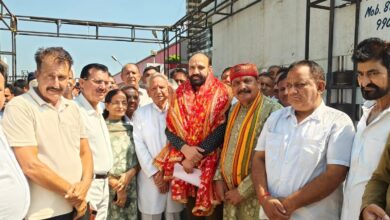
The latest move is the formation of a separate ‘Pasmanda’ Muslim cell within the BJP in Uttarakhand, with the appointment of Haji Irshad as its state president. The BJP’s existing minority cell and the Rashtriya Muslim Manch, functioning under the guidance of senior RSS ideologue Indresh Kumar, are already active in the state.
The formation of a separate Pasmanda cell indicates that the BJP and RSS are seeking to test a strategy of mobilising sections of the Muslim community ahead of the crucial Assembly elections. For several years, the BJP and RSS have promoted the narrative that Pasmanda Muslims have faced social and political discrimination at the hands of so-called upper-caste Muslims and that they need to break free from this alleged domination.
There is no caste system in Islam as a matter of religious doctrine. However, social stratification and caste-like divisions have existed among sections of Indian Muslims, influenced by the broader social environment and caste hierarchy of the subcontinent. These distinctions have generally been more visible in matters such as marriage and social organisation than in religious practices.
The BJP’s attempt to consolidate Pasmanda Muslims under a separate political banner is being viewed by its critics as an effort to make a dent in the Muslim vote, which could be significant in Dehradun, Haridwar, Nainital and Udham Singh Nagar districts. Together, these four districts account for 36 of Uttarakhand’s 70 Assembly constituencies. Muslims constitute a significant share of the population in several constituencies in these districts and have traditionally supported opposition parties, particularly the Congress, following the decline of the Bahujan Samaj Party (BSP) in the state over the past decade.
A substantial section of Uttarakhand’s Muslim population belongs to communities described as Pasmanda. The community had extended considerable support to the BSP during the first two Assembly elections in the state, held in 2002 and 2007. The BSP subsequently lost much of this support, while the Congress emerged as the principal alternative for many Muslim voters.
According to political observers, even a small shift in Muslim voting patterns could have electoral significance in a closely contested election. Critics of the BJP’s Pasmanda outreach argue that highlighting alleged discrimination against Pasmanda Muslims by other sections of the Muslim community could fragment an otherwise consolidated voting pattern.
“The BJP and RSS, after creating a gulf between Hindus and Muslims, now plan to divide the Muslim community by highlighting the issue of alleged atrocities against Pasmanda Muslims by upper-caste Muslims. Everyone is equal in Islam and they will not succeed,” said Nayeem Quraishy, national spokesperson of the Azad Samaj Party and a Dehradun resident.
Another controversy concerns the Uttarakhand Waqf Board, headed by BJP leader Shadab Shams. The chairman has launched a campaign against alleged encroachments on Waqf properties, including commercial establishments run by Muslims.
Recently, shops at Sahastradhara Road crossing in Dehradun were marked for demolition. The Waqf Board alleged that the Muslim shopkeepers were occupying Waqf land as encroachers and should instead become registered tenants. The shopkeepers, however, contend that they have been in possession of the properties for nearly four decades.
Following protests and intervention by the Muslim Sewa Sangathan, the proposed demolitions were stopped. The controversy, however, has raised questions over the functioning of the Waqf Board and the manner in which its properties are being managed.
In another case, allegations have been levelled over the appointment of a BJP worker as mutawalli (caretaker) of the historic Afghan Mosque on E.C. Road. It has further been alleged that a relative of the mutawalli was subsequently allowed to occupy a commercially valuable Waqf property after the expiry of its 30-year lease in June 2026. Critics allege that the property, which could potentially generate substantial rental income, has been leased at a nominal monthly rent. These allegations require examination on the basis of official Waqf records and other documentary evidence.
Uttarakhand has also witnessed a sustained political campaign around issues described by the BJP and its supporters as ‘Love Jihad’, ‘Land Jihad’, ‘Thook Jihad’ and ‘Mazar Jihad’. Critics have described these campaigns as part of a broader anti-Muslim political narrative.
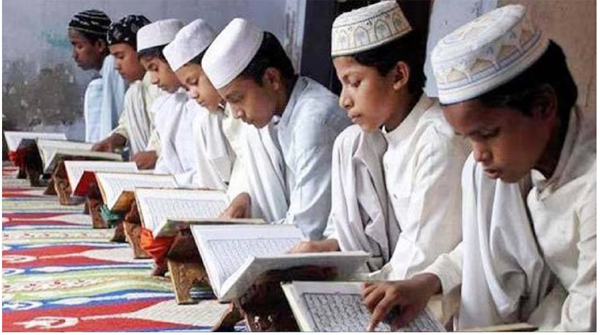
More than 600 mazars have reportedly been removed or demolished in the state on the grounds that they were situated on government or forest land. At the same time, the state government has taken measures affecting madrassas and introduced the Uniform Civil Code (UCC), becoming the first Indian state to bring such legislation into force.
The BJP and RSS have sought to present several of these initiatives as measures aimed at social reform, regulation of public land and equal application of the law. Critics, however, view them as part of a broader political strategy affecting the Muslim community.
With the Assembly elections approaching, the creation of a separate Pasmanda cell adds another dimension to the political contest over Muslim voters in Uttarakhand. Whether the initiative will result in any significant change in voting patterns remains a question for the electorate to decide.