Justice Aga Haider deserves better recognition: Syed Yusuf Haider
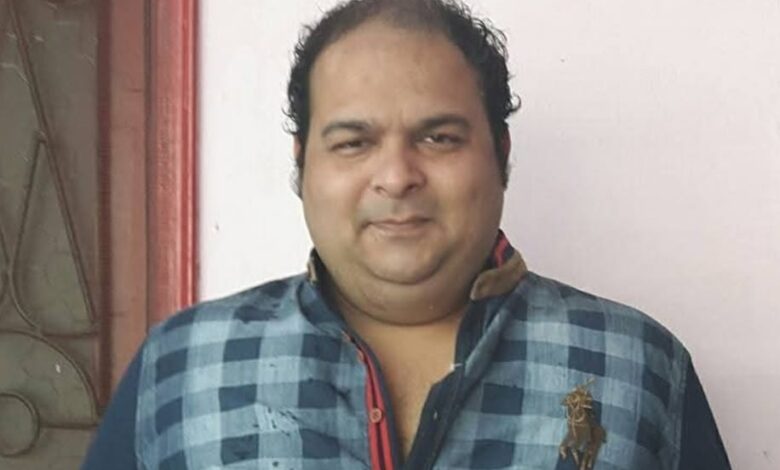
Justice Aga Haider deserves better recognition: Syed Yusuf Haider
S.M.A. KAZMI
Dehradun, Oct. 18: Syed Yusuf Haider, a great-grandson of Justice Aga Haider, the Indian judge who stood up to the British during the infamous Lahore Conspiracy Case trial of revolutionaries in 1930, has lamented that successive governments have failed to recognise his ancestor’s contribution, leaving him largely forgotten even in his hometown of Saharanpur in Uttar Pradesh.
Syed Yusuf Haider has demanded that Justice Aga Haider be honoured with a memorial and given his rightful place in history books so that younger generations can learn about his courage and commitment to justice.
Justice Syed Agha Haider Zaidi, a senior judge of the Lahore High Court, was a member of the special tribunal constituted to try Bhagat Singh, Sukhdev, Rajguru and other revolutionaries in the Lahore Conspiracy Case. He displayed exceptional courage and moral conviction while attempting to uphold the rule of law in the face of British imperialist designs against the young revolutionaries. His conduct made him, in many ways, a courtroom comrade of the accused.
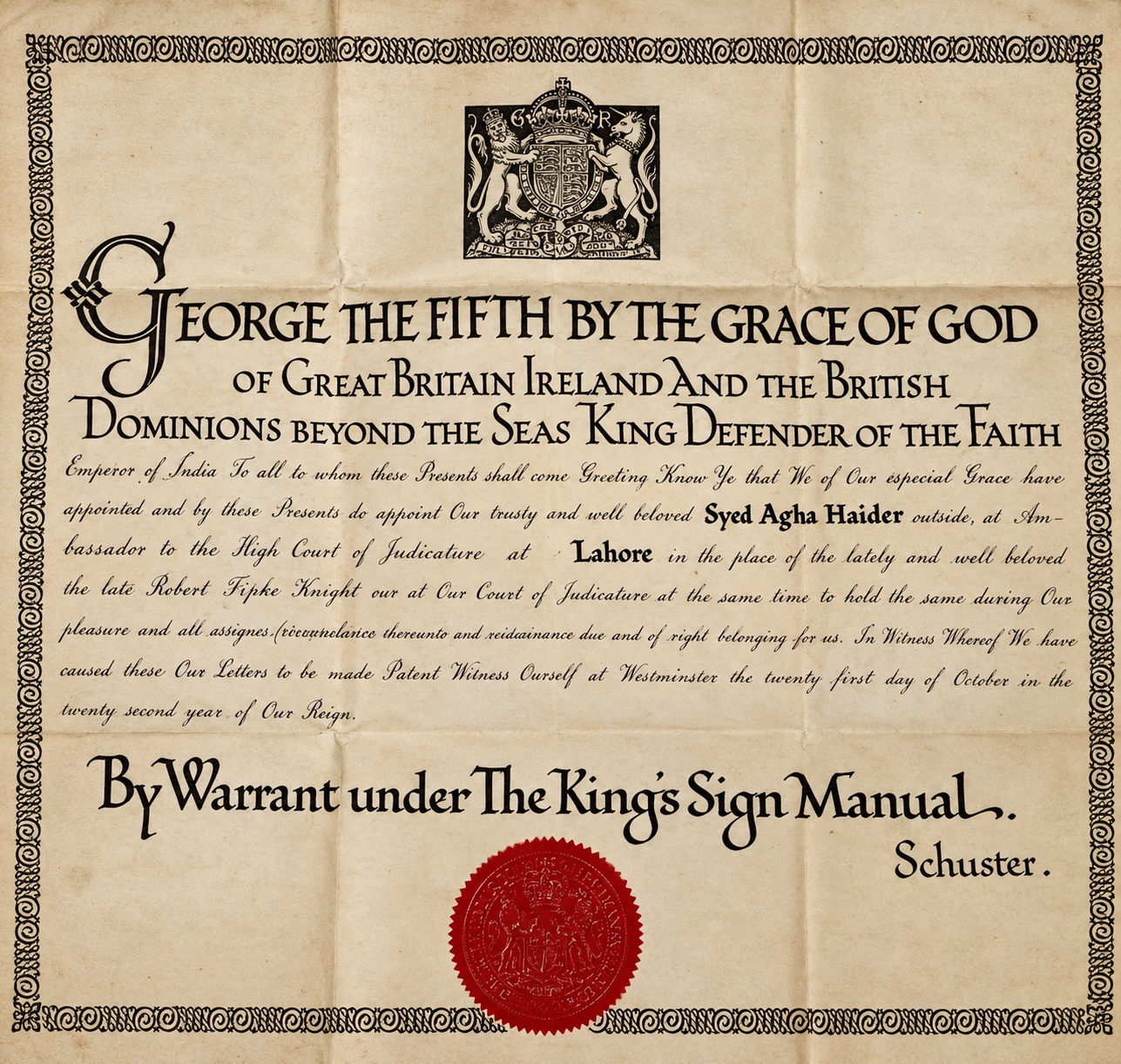
Displaying family memorabilia, including the warrant of appointment issued in the name of the British monarch appointing Justice Aga Haider as a judge of the Lahore High Court, Syed Yusuf Haider said that his ancestor’s contribution had been overlooked for decades.
Justice Aga Haider was also elected to the Uttar Pradesh Legislative Council (Vidhan Parishad) in 1937, where he participated in debates in the Upper House. One of the wealthiest landowners in Saharanpur district during his time, he died on February 5, 1947. He was buried in the family graveyard near Bajoria School in Saharanpur, where his grave remains unmarked and is now difficult to identify. Apart from a few elderly family members, few people are likely to know its exact location.
His wish to be buried in Karbala, Iraq, could not be fulfilled because of the turmoil surrounding India’s impending independence and Partition.
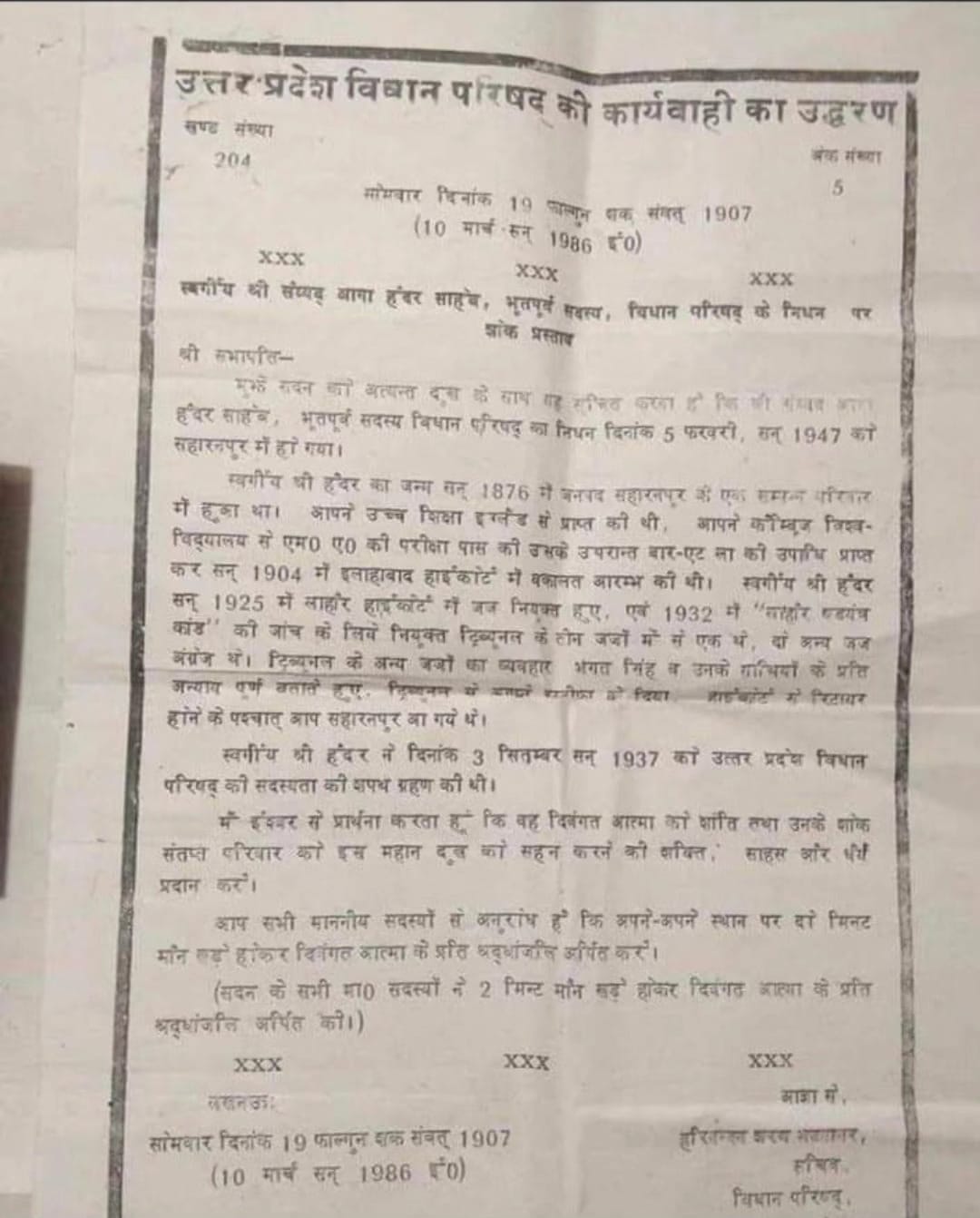
The neglect of his legacy is also reflected in the fact that the Uttar Pradesh Vidhan Parishad passed a condolence resolution on his death only on March 10, 1986, nearly four decades after his demise.
Justice Aga Haider was born in Mohalla Meerkot, Saharanpur, into an illustrious aristocratic Shia Syed family. His father, Syed Ehsan Ali, was a public prosecutor, while his grandfather, Ghulam Rasool, was a renowned personality of his time. Aga Haider and his brother, Mumtaz Ali, followed the family tradition of practising law.
After studying law in England, Aga Haider began practising at Allahabad. A contemporary of Motilal Nehru, he was elevated to the Allahabad High Court before being transferred to the Punjab High Court in Lahore.
Justice Aga Haider demonstrated his resolve during the Bhagat Singh trial by challenging the British authorities’ designs and exposing what he regarded as the failure of his fellow judges on the special tribunal to uphold judicial independence.
A fearless Indian judge who refused to bend before British authority, Aga Haider was ultimately removed from the tribunal after the colonial government dissolved and reconstituted it. The move enabled the British authorities to proceed with the trial in a manner that facilitated their objective of executing the young revolutionaries.
His role in this landmark episode of India’s freedom struggle, Syed Yusuf Haider argues, deserves far greater recognition than it has received. A memorial in his honour and an appropriate place for him in history books would help restore the legacy of a judge who sought to uphold the principles of justice and the rule of law in the face of colonial pressure.