
Late snowfall affects extraction of ‘Yarsa Gumba’ in higher Himalayan areas
Late snowfall affects extraction of ‘Yarsa Gumba’ in higher Himalayan areas
B.D.Kasniyal
Pithoragarh, April 13
More than 500 families of 60 villages of high Himalayan region of Munsiyari and Dharchula sub-divisions of Pithoragarh district, are uncertain about their earnings this summer as the extraction of ‘Yarsa Gumba’( cordyceps sinensis), caterpillar has been delayed this year due to presence of heavy snow deposits in meadows where this rare drug is found during summer months.
“The season of extraction of ‘Yarsa Gumba’, that usually used to begin from first week of March every year, is being waited eagerly by villagers this year as snow has not melted in upper ridges of Himalayas,” said Anand Goswami, a villager of Walthi village of Munsiyari who goes to collect the drug every year.
“Despite the season already late by a month, the villagers are still waiting snow deposits to melt,” said Goswami.
‘Yarsa Gumba’ sprouts in snow clad regions of high Himalaya only after snow starts melting after March every year. “This year due to late snowfall in March- April, the meadows are still under cover of snow resulting in non-visibility of ‘Yarsa Gumba’ as it remains under snow,” said Goswami.
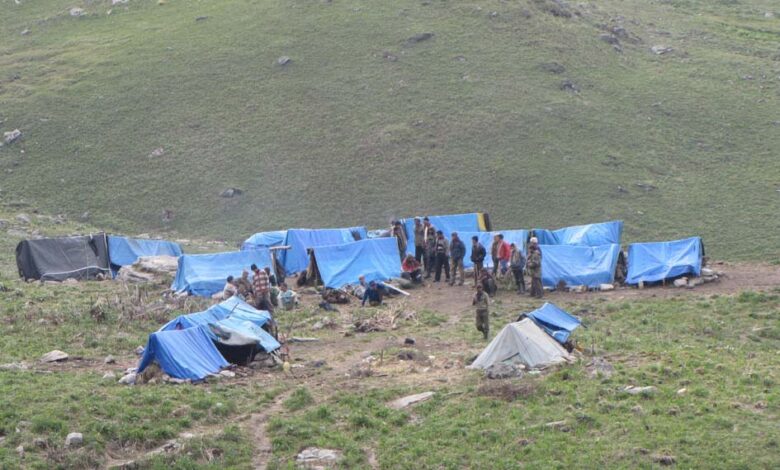
According to local sources in Munsiyari, over 500 villagers of 60 villages close to high Himalayan meadows, reach at 3500 to 4200 meters high region, and stay in tented colonies to collect the drug from first week of March to May second week every year. “They face difficulty while looking for the caterpillar at high Himalayan region as this work is their sole source of livelihood since 1994, when the extraction of ‘Yarsa Gumba’ started in this part of Himalayas,” said Puran Pandey, a journalist and businessman based in Munsiyari.
“The villagers reach Chiplakot, Rajrambha, Nagin Dhura, Panchachuli, Lawa Gwar and other meadows at the heights of 3500 to 4200 meters to collect the ‘Yarsa Gumba’ ,” said Pandey.
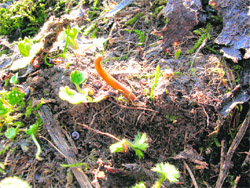
Due to unusual snowfall in these high Himalayan meadows this year, some villagers have apprehensions that the ‘Yarsa Gumba’ sprouting might be affected due to long duration of snow in the region while others are still expecting better results. ” Though there is no studies of how the fungus reacts on long duration under snow cover, we hope the fungus survives long duration snow and this situation might result in more yield,” said Dr N.C. Joshi, a botanist working with Uttarakhand Council of Science and Technology at Manas Khand campus in Almora.
For more than two decades, for villagers living in the higher Himalayan region, this has been a primary avocation since it was found that the Tibetan medicinal plant also grows in abundance in the meadows of Chiplakot besides the Himalayan sub-alpine region of western Nepal. ‘Yarsa Gumba’ is an intomophilus fungus found primarily in the sub-alpine region, 3,200 to 4,000 metres above the sea level. The fungus is parasitic like the caterpillar.
The extraction of yarsagumba started in this part of the Himalayas in 1998 when Tibetan traders learnt of its presence here and began trafficking it to Tibet and China via Nepal. The miraculous impact of “cordyceps sinessis” became known to the outside world when a few years back, Chinese women athletes were found using ‘Yarsa Gumba’ to energise them. The consumption of this aphrodisiac plant by the Chinese and Tibetans began some 1,500 years ago when some Chinese herdsmen observed that their livestock became energetic after eating a fungus-like grass.
About 1,000 years later, the Ming emperors started using it as a tonic after developing powerful potions from it. Old Tibetan medical practitioners believed that “cordyceps sinensis” enhanced lung functioning, bolstered kidney energy, cured cough, impotence, spermatorrhoea, asthma, aching back and knees and general debility caused by long-term illness. ‘Yarsa Gumba’ fetches a good price for retail as well as in the wholesale market. The prices could range from Rs 80,000 to Rs 1,00,000 per kilogram.