
A fiery cry from Himalayan forests
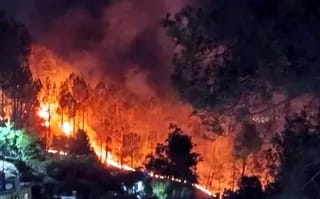
A fiery cry from Himalayan forests
Prem Prakash Upadhyay “Natural”
Bageshwar, May 23
Uttarakhand is no longer battling merely an intense summer, it is also witnessing slow destruction of its ecological soul. Across the mountains, forests are turning into ashes, thick smoke hangs heavily in the air, and the once-refreshing Himalayan breeze now carries the smell of burning wood, fear, and loss. What was once considered a seasonal challenge has now evolved into a full-scale environmental emergency threatening the fragile ecosystem of the Himalayas.
From the forests of Bageshwar’s Gairad, Bilkhet, Bhumiyadhar, Chandika Road, and Garud regions to the fire-ravaged hills of Berinag tehsil in Pithoragarh, the flames continue to spread relentlessly. The blaze that reportedly began near Koteshwar Mahadev has now advanced dangerously close to roadside shops along the Rai Agar highway, creating panic among local residents and exposing how vulnerable human settlements have become. The devastation is no longer confined to Kumaon region alone as several areas of Garhwal region are also battling uncontrolled forest fires, while dry winds and rising temperatures continue to intensify the crisis with each passing day.
Everyone knows about forests fires whether they are administrators, officials, politicians, or ordinary citizens. Yet the most uncomfortable question remains unanswered, why does this tragedy return every year with the same helplessness? Thousands of hectares of forest land are destroyed annually, wildlife perishes silently, natural water sources shrink, and mountain communities continue to suffer, while the overall response often appears reactive rather than preventive.
The reality is that forest fires today are no longer purely natural disasters. Climate change, prolonged dry spells, rising temperatures, and human negligence have transformed vast stretches of forest into tinderboxes. A carelessly discarded cigarette butt, a burning bidi, or even a tiny spark can set an entire hillside ablaze within minutes. Dry pine needles further accelerate the spread of fire, making it extraordinarily difficult for firefighting teams to contain the flames once they intensify.
However, the destruction caused by these fires extends far beyond burnt trees. Birds lose their nests, wild animals are forced to flee their habitats, rivers and natural springs begin to dry up, and the fragile Himalayan ecosystem weakens further. Smoke-filled air affects children, the elderly, and particularly those suffering from respiratory illnesses. Agriculture, livestock, tourism, and rural livelihoods all bear the hidden cost of these recurring disasters. Forest fires are no longer merely a forest department issue; they have become a direct threat to public health, biodiversity, water security, and the future of mountain life itself.
Yet forests cannot be protected through official machinery alone unless citizens actively participate to check it or the cycle of destruction will continue year after year. Forest conservation must become a people’s movement involving every village, forest panchayat, local volunteer group, youth organization, and individual citizen.
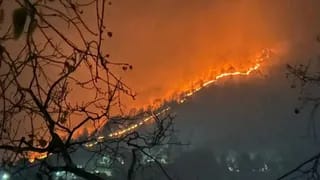
The solutions are neither impossible nor out of reach. Public awareness and small behavioural changes can create a meaningful impact. People must stop throwing burning cigarettes and bidis in forest areas. Dry leaves and waste should never be set on fire irresponsibly. Broad-leaved native species such as oak, rhododendron, walnut, and kafal should be planted on a larger scale, as they naturally help slow down the spread of fire compared to highly resinous pine forests.
Equally important is rebuilding humanity’s emotional connection with nature. Every celebration — whether a birthday, ‘janeu Sanskar;, marriage, festival, or personal achievement — should become an opportunity to plant a tree. Communities living near forests must receive proper training in fire prevention, early warning systems, and rapid response measures. At the same time, those deliberately setting forests ablaze must face strict legal consequences.
Uttarakhand’s true identity lies in its forests, glaciers, rivers, alpine meadows, ponds, waterfalls, and Himalayan landscapes. If the forests disappear, the Himalayas themselves will become vulnerable. And if the Himalayas weaken, the consequences will not remain confined to Uttarakhand alone; they will affect water security, climate stability, and ecological balance across much of India.
“Save water, save the future” is no longer merely a slogan — it is a warning for humanity. The environmental crisis threatening our blue planet cannot be solved overnight, but it can certainly be reduced through collective responsibility, sustainable habits, and continuous effort.
Forest Fires Rage Across Uttarakhand, 257 Hectares of Forest Damaged.
As temperatures continue to rise, forest fires are becoming severe in the hilly districts of Uttarakhand. Over the past few days, the mercury has surged sharply, and the fire is spreading rapidly through the forests depleting water resources.
This has created a serious threat not only to the environment but also to biodiversity. In several places, the fire has started moving toward inhabited areas as well.
So far, 309 incidents of forest fires have been reported across the state, damaging around 257.27 hectares of forest land.
The increasing incidents of forest fires like previous years have become a major concern but is anyone accountable .