Sukesh. C. Khajuria calls for strengthening enforcement of drug quality standards and rationalization of maximum retail price (MRP) under the Existing Legal Framework
Sukesh. C. Khajuria calls for strengthening enforcement of drug quality standards and rationalization of maximum retail price (MRP) under the Existing Legal Framework
Jammu, May 12
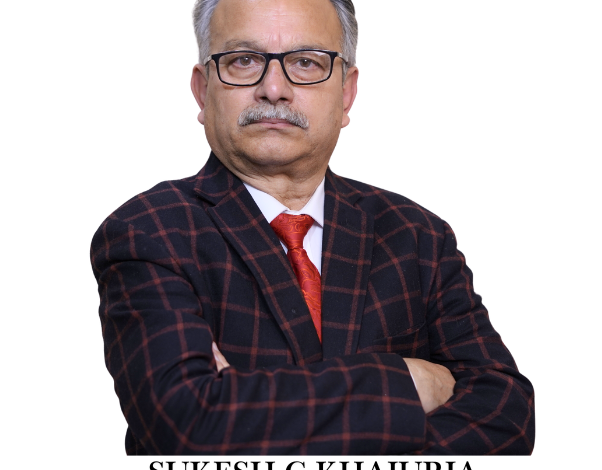
Sukesh C. Khajuria, a senior social and health activist, has submitted a representation to the Union Health Minister drawing his attention towards the matters of significant public importance concerning the quality of pharmaceutical products and the regulation of their pricing within India.
The quality of drugs is beyond the understanding of common man. It is the responsibility of the state and centre government to ensure the availability of quality drugs to the public and the market is free from the counterfeit, spurious and substandard drugs.
Highlighting serious concern over instances of substandard, spurious, or non-uniform quality medicines continue to be reported from time to time, Sukesh C.Khajuria wrote that such occurrences pose a direct threat to public health, compromise patient safety, and erode public confidence in the healthcare delivery system.
He further said that these issues herein arise in the context of the effective implementation of the statutory provisions contained in the Drugs and Cosmetics Act, 1940, the Drugs and Cosmetics Rules, 1945, and the Drug (Prices Control) Order, 2013 (DPCO). While these enactments provide a comprehensive regulatory framework, there appears to be a discernible gap in their uniform enforcement, particularly with respect to ensuring consistent drug quality standards and rational pricing across the pharmaceutical sector, he said.
On the pricing system, the health activist said that it has been observed that there exists a wide and often unjustified variation in the Maximum Retail Price (MRP) of identical or therapeutically equivalent drug formulations marketed under different brand names. This disparity imposes an unwarranted financial burden upon patients, particularly those belonging to economically vulnerable sections of society.
He submitted that the Maximum Retail Price (MRP) of medicines inherently incorporates profit margins at multiple stages of the supply chain, including that of the manufacturer, distributor, wholesaler, and retailer. Each such intermediary contributes to the cumulative escalation of the final price. Further, the cost structure of medicines comprises not only raw materials and labour but also substantial expenditure on advertising, publicity, and sales promotion. Such promotional expenses, in certain instances, extend beyond conventional marketing practices and may include indirect or concealed expenditures such as sponsored foreign travel, expensive gifts, cash incentives, Continuing Medical Education (CME) programs, seminars, and other hospitality-related benefits extended to medical practitioners and associated stakeholders. These factors significantly inflate the overall cost of medicines without corresponding enhancement in therapeutic value, he highlighted.
Sukesh C.Khajuria pointed that online retail platforms and certain distribution channels frequently offer discounts ranging from 10% to 50% on the MRP, thereby indicating the extent of price inflation within the prevailing system. Moreover, under the Pradhan Mantri Bhartiya Janaushadhi Pariyojana (Jan Aushadhi Kendras), generic medicines are made available at prices substantially lower—often between 50% to 90%—than branded equivalents. These medicines are supplied under the aegis of the Department of Pharmaceuticals, Ministry of Chemicals and Fertilizers, Government of India, and adhere to WHO-GMP standards while being tested in NABL-accredited laboratories, thereby ensuring their quality, safety, and efficacy, he added.
In this regard, Khajuria pointed to the role of the National Pharmaceutical Pricing Authority (NPPA) is of critical importance in ensuring compliance with the provisions of the DPCO and maintaining price discipline in the pharmaceutical market. He submitted that there is a pressing need to further strengthen its enforcement mechanisms, monitoring capabilities, and administrative oversight to effectively address irrational pricing practices.
He also proposed that the technical expertise of the Institute of Cost Accountants of India (ICWAI) now officially known as the Institute of Cost Accounts of India (ICMAI) located in Kolkata , with a new headquarters in New Delhi From 2025-26 , may be formally leveraged to introduce a structured and independent cost-audit mechanism. Such involvement would facilitate scientific determination of pricing, validation of cost structures, and enhanced transparency, thereby contributing to more equitable and evidence-based drug pricing policies.
Sukesh C.Khajuria prayed that the Union Health ministry should strengthen regulatory surveillance and enforcement under the Drugs and Cosmetics Act, 1940 to ensure strict adherence to prescribed drug quality standards, augment the functional capacity and enforcement powers of NPPA to enable more effective monitoring and control of pharmaceutical pricing, institute an independent cost-audit framework, with the involvement of professional bodies such as ICWAI, for rational fixation of MRPs based on actual and verifiable cost structures, prescribe stringent penalties and initiating strict legal action against manufacturers, distributors, or entities found engaged in the production or sale of substandard or overpriced medicines and enhancing transparency and public accountability through mandatory disclosure of drug pricing methodologies and periodic publication of quality compliance reports.
He concluded by asserting that the representation has been submitted in the larger public interest with an objective to safeguard the fundamental right to health and ensuring access to safe, effective, and affordable medicines for all citizens and hoped that necessary and appropriate action would be taken at the earliest.
A copy of the said representation addressed to the hon’ble union health and family welfare minister Shri Jagat Prakash Nadda has also been forwarded to the chairperson, National Pharmaceutical Pricing Authority (NPPA) & the Drugs Controller General of India (DCGI), Central drugs Standard control organisation (CDSCO).