Uttarakhand Minority Education Authority empowered to shut down minority educational institutions, Including unregistered ‘Madrasas’
No restrictions on running ‘Maktabs’ or Institutions offering Degree-Level education
Uttarakhand Minority Education Authority empowered to shut down minority educational institutions, Including unregistered ‘Madrasas’
No restrictions on running ‘Maktabs’ or Institutions offering Degree-Level education
Kashipur, July 11
Effective from June 30, 2026, the Uttarakhand Minority Education Authority has been granted the power to shut down minority educational institutions—including madrasas operating without recognition—impose fines of up to ₹5 lakh on their operators, and appoint receivers.
Minority institutions running ‘Maktabs’ or offering education beyond the Intermediate (Class 12) level—such as higher or degree-level education—fall outside the scope of the Act, and there are no restrictions on operating them.
Interestingly, the government-constituted Uttarakhand Madrasa Board conducted five sets of examinations over a period of 13 years and the number of candidates appearing in these examinations remained low.
Nadeem Uddin, an advocate and Right to Information (RTI) activist from Kashipur, had sought information from the Uttarakhand Madrasa Education Council regarding the examinations it conducted and other related matters. In response, Ram Singh, the Public Information Officer/Registrar of the Uttarakhand Madrasa Education Council, Dehradun, provided the requested information via letter no. 102 dated June 23, 2026.
Additionally, the Extraordinary Gazette for the Uttarakhand Minority Education Act, 2025 (dated October 8, 2025) and the Extraordinary Gazette for the Uttarakhand Minority Education Act (Amendment) Ordinance, 2026 (dated June 30, 2026) are available on the Uttarakhand government’s website. The Uttarakhand Minority Education Act (Amendment) Ordinance, 2026, was published in the Extraordinary Gazette dated June 30, 2026, which was made available to Mr. Nadeem. This ordinance amends Sections 2, 3, 4, 11, 12, 14, and 18 of the Act. The definition of “educational institution” under Section 2(a) has been amended. It now encompasses institutions providing education up to Class 8 that are recognized by the competent authority, and institutions providing education from Class 9 to 12 that are recognized by the Uttarakhand Board of School Education (Uttarakhand Board).
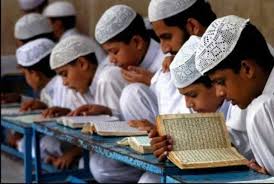
According to Advocate Nadeem Uddin—a legal expert and author of 45 law books—institutions that do not impart classroom-based education (such as ‘Maktabs’), as well as institutions offering degree-level education, fall outside this scope. In its judgment dated August 26, 2025, regarding Writ Petition No. 835 of 2025 (and other connected petitions), the Hon’ble High Court distinguished ‘Maktabs’ from ‘Madrasas’, ruling that ‘Maktabs’ may operate without registration. A ‘Maktab’ is defined as an institution where children learn to read the Quran and are taught grammar and traditions; the right to operate such an institution is constitutionally protected. Information provided to Mr. Nadeem by the Madrasa Board reveals that between 2013 and 2025, five types of examinations were conducted—Munshi (High School), Maulvi (High School), and Alim Arabic-Persian (Intermediate)—while Kamil and Fazil examinations were also held between 2013 and 2024. A total of 1,605 candidates appeared for these examinations in 2013, comprising 506 for Munshi, 564 for Maulvi, 278 for Alim Arabic-Persian, 193 for Kamil, and 64 for Fazil. In the year 2014, a total of 2,546 candidates appeared for the examination, comprising 721 Munshi, 983 Maulvi, 461 Alim (Arabic-Persian), 348 Kamil, and 33 Fazil candidates; in 2015, a total of 3,251 candidates appeared, comprising 847 Munshi, 1,356 Maulvi, 446 Alim (Arabic-Persian), 564 Kamil, and 38 Fazil candidates; in 2016, a total of 3,892 candidates appeared, comprising 1,028 Munshi, 1,308 Maulvi, 724 Alim (Arabic-Persian), 719 Kamil, and 113 Fazil candidates; in 2017, a total of 5,764 candidates appeared, comprising 1,355 Munshi, 1,985 Maulvi, 1,187 Alim (Arabic-Persian), 1,011 Kamil, and 302 Fazil candidates.
In 2018, a total of 5,518 candidates appeared, comprising 993 Munshi, 1,955 Maulvi, 988 Alim (Arabic-Persian), 1,280 Kamil, and 302 Fazil candidates; in 2019, a total of 5,746 candidates appeared, comprising 815 Munshi, 1,935 Maulvi, 1,145 Alim (Arabic-Persian), 1,481 Kamil, and 370 Fazil candidates; in 2020, a total of 5,172 candidates appeared, comprising 735 Munshi, 1,487 Maulvi, 1,015 Alim (Arabic-Persian), 1,521 Kamil, and 414 Fazil candidates; in 2021, a total of 4,188 candidates appeared, comprising 614 Munshi, …including 1,177 Maulvis, 767 Alim (Arabic-Persian), 1,203 Kamils, and 427 Fazils; in the year 2022, a total of 3,141 candidates appeared, comprising 486 Munshis, 832 Maulvis, 661 Alim (Arabic-Persian), 836 Kamils, and 326 Fazils; in the year 2023, a total of 2,368 candidates appeared, comprising 372 Munshis, 674 Maulvis, 428 Alim (Arabic-Persian), 675 Kamils, and 219 Fazils; in the year 2024, a total of 1,849 candidates appeared, comprising 249 Munshis, 511 Maulvis, 336 Alim (Arabic-Persian), 558 Kamils, and 195 Fazils; and in the year 2025, a total of 738 candidates appeared, comprising 163 Munshis, 333 Maulvis, and 242 Alim (Arabic-Persian).