
Citizenship, Constitutional Nationalism and the Future of Indian Democracy.
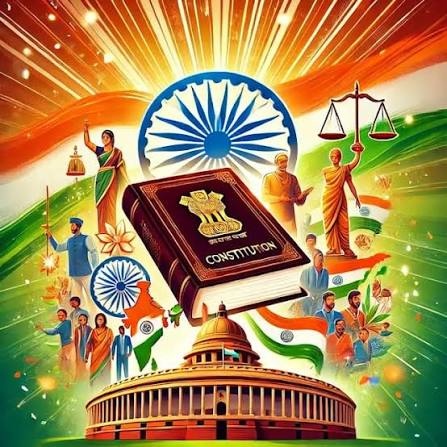
Citizenship, Constitutional Nationalism and the Future of Indian Democracy.
Khursheed Ahmad Siddiqui
Dehradun, July 12
The debate on citizenship in India is no longer confined to the Citizenship Act, 1955. It now encompasses the 1985 and 2003 amendments, the National Population Register (NPR), the proposed National Register of Citizens (NRC), the Citizenship (Amendment) Act, 2019 (CAA), and recent exercises such as the Special Intensive Revision (SIR) of electoral rolls. Considered individually, each measure may have its own legal justification. Viewed collectively, however, they raise a larger constitutional question: Is India gradually shifting from citizenship as a legal status to citizenship as an exercise in proving identity and ancestry?
The Constitution of India establishes citizenship as a legal relationship between the individual and the Republic. It does not recognise citizenship based upon religious affiliation, cultural conformity, or ideological commitment. Articles 14, 15, 19, 21 and 25 guarantee equality, liberty, dignity, freedom of expression, and freedom of religion. These guarantees form the bedrock of constitutional nationalism.
Unlike many countries, India has never maintained a single, universally accepted document that conclusively establishes citizenship. Passports, electoral rolls, birth certificates, Aadhaar, ration cards and other official documents serve different statutory purposes. Consequently, any process that requires citizens to establish citizenship through documentary lineage must be implemented with extraordinary fairness, transparency and procedural safeguards. Otherwise, genuine citizens may face the risk of exclusion due to circumstances entirely beyond their control.
The concern becomes even more significant when public discourse increasingly associates nationalism with adherence to a particular cultural or religious idea of the nation. Concepts such as ‘Punya Bhoomi’ and ‘Pitr Bhoomi’ may hold philosophical significance for some, but they cannot become constitutional tests of citizenship or patriotism. Equally, expressions such as ‘Vande Mataram’ may inspire millions, but the Constitution does not permit patriotism to be measured by the recitation of any slogan or participation in any religious or cultural practice.
The Supreme Court has consistently held that constitutional morality—not majoritarian morality—is the guiding principle of the Republic. India’s constitutional identity rests upon justice, liberty, equality, fraternity, secularism and the rule of law. Every citizen is equal before the Constitution; there can be neither first-class nor second-class citizenship.
It is therefore understandable that many Muslims, Christians and other minorities express apprehensions regarding the cumulative impact of recent legislative and administrative developments. These concerns are intensified by incidents of communal violence, attacks on places of worship, and governmental decisions affecting minority institutions. Whether these concerns ultimately prove legally justified is a matter for constitutional courts. However, in a constitutional democracy, the perception of unequal treatment itself deserves serious attention.
This is not merely a minority issue. If citizenship or electoral rights become increasingly dependent upon documentary ancestry in a country where millions lack complete historical records, the consequences could extend far beyond any one community. The constitutional guarantee of equality protects every Indian citizen.
The Republic was not founded upon common religion, common language or common ancestry. It was founded upon a common Constitution. India’s strength lies in protecting the rights of all citizens equally, regardless of faith, caste, language or ideology.
The true test of Indian nationalism is not whether one conforms to a particular cultural narrative. The true test is whether the State remains faithful to the Constitution and whether every citizen enjoys equal protection under its laws.
History teaches us that democracies are not weakened by diversity; they are weakened when constitutional rights become conditional rather than universal. The preservation of constitutional citizenship is, therefore, not merely a legal obligation—it is the very foundation of the Indian Republic.
( The writer is a social worker.)