What my brush with ULFA insurgents taught me
What my brush with ULFA insurgents taught me
By Anil Datta
Dehradun, June 1
An insurgent organization most often forms when the citizens or residents in a community feel their genuine grievances remain unresolved despite several appeals for redressal made to the powers that be. Apart from causing deep frustration, governmental inaction also, in many cases, instils a feeling of humiliation and anger. This, in turn, can cause disgruntled groups to turn to other, usually illegal or unsavoury means to pressure the government into taking their demands seriously and finding adequate solutions.
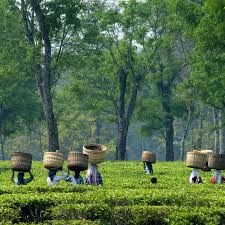
Such a scenario occurred in Assam in the late 50s and 60s. The people of Assam had several genuine issues that were repeatedly brought to the notice of the Central Government. These were largely ignored, and no effort was made to have them resolved. The main one was the illegal infiltration into the state from erstwhile East Pakistan/Bangladesh through the porous border. These illegal migrants competed for land, education and jobs with the locals, leaving them with long-festering resentments. The other problem was the under development of the state in spite of the fact that Assam was a substantial contributor to the national exchequer. Assam is blessed with oil, natural gas, coal, tea {the highest foreign exchange earner then} and forest produce. Yet, the state was badly neglected as far as investments in infrastructure and supply chains were concerned. For example, the national highway from Guwahati to Tinsukia, a distance of 485 kilometres, was a two-lane road, one lane each way, and the journey took almost ten hours to complete. State roads were untarred, gravel topped, and pot-holed. Water and electricity supply in towns was dismal to say the least. Moreover, as there was no oil refinery in Assam, the oil had to be pumped to Baruni in Bihar for refining, thus depriving the locals of resulting employment and other related benefits. The all-important Assam accord, addressing the ‘foreigners’ issue, was signed between the Government of India, Government of Assam, All Assam Students Union {AASU} and All Assam Gana Sangram Parishad {AAGSP} on August 15,1985, a wait far too long and after many months of bloody riots.
As a result of governmental inaction, the United Liberation Front of Asom {ULFA} was formed on April 7, 1979 in Sibsagar, Assam. The original motive in forming this organization was to establish a “sovereign socialist Assam” through armed struggle. Founded by radical leaders from the anti-foreigner agitation group, it sought secession from India and the formation of a new state based on Assamese nationalism. With a military wing headed by Paresh Baruah and a political wing led by Arabinda Rajkhowa, ULFA launched its pressure campaign.
They began by adopting illegal means to force the government to give their grievances the attention they deserved. The main goal was to raise large amounts of money, and the only way they saw fit to do so was through extortion largely aimed at blue chip companies. If an initial demand for funds from a company did not get the desired results, they resorted to kidnapping.
Some of my colleagues on the tea gardens were kidnapped and a huge ransom was extracted from their employers to ensure their release. If kidnapping didn’t work, they just shot and killed one of the senior executives of the offending company. For instance, Surendra Paul, the chairman of Apeejay Surendra Group, was assassinated in April 1990 because he could not or did not pay the amount of money demanded of him. In addition, the militants would forcefully highjack plantation managers’ jeeps and use them to conduct their nefarious activities. As a result, the managers would get into trouble with the local law enforcement authorities as their vehicles were involved in criminal activity. The central government’s response was to ban ULFA deeming it a terrorist organization and to launch a military operation to bring these insurgents to book
As a tea plantation manager, I was keenly aware of the danger ULFA posed but was fortunately spared a direct confrontation with them until 1990 when I was manager at Tinkharia Tea Estate in Assam. One morning at about 8 am two strangers suddenly barged into my office and sat themselves down on chairs in front of my desk. In their early 30s, the two men were wearing western attire: shirts, jeans and sandals. Annoyed at their intrusion, I asked them in English who they were and why they had entered my office unbidden.
In a loud, haughty tone one of them announced, “We are from ULFA.” Hearing this I froze and was overwhelmed with apprehension as to what was to follow. However, I forced myself to stay calm and thought how could I resolve this situation. I immediately switched to Assamese and welcomed them to our tea estate. “Oh, you are from ULFA I did not know. What brings you to us? What can I do for you?” I asked.
I could see from their reaction that they were shocked to hear me speak their language. Just like a balloon collapsing when pricked, their haughtiness of a moment ago disappeared instantly. I was amazed to see the benevolent expression and friendly tone that replaced it for the rest of our exchange. Instead of demanding money, they said, “Sir, we would like to have some business from you.”
Quite taken aback at this new approach, I wondered what I could ask them to supply. I suddenly recalled that some of our fencing posts were in need of replacement. “Do you think you could get us fencing posts,” I asked. “Certainly, Sir. How many?” I gave them a figure, and after some mild negotiations, a price was agreed and they were given a firm order. We sealed the deal with a handshake. However, after they left, I wondered if they’d keep their part of the bargain. I was pleasantly surprised when, true to their word, they delivered the fencing posts in the right quantity exactly on the agreed day. A couple of days later, I gave them a cheque for the full amount.
With this transaction, I managed to get them completely on my side. Wanting to help me, they gave me a letter written on their dreaded official letter head paper saying that the management of Tinkharia Tea Estate were under their protection. Any attempt to extort money, or harass us in any way, would mean that they would have to deal with them, ULFA. Before they left, they gave me a phone number telling me to let them know should we be harassed by anyone.
This warning letter was an ominous missive indeed. This paper was a great insurance for us. It saved us from a lot of grief when visited by other motley groups demanding money. One look at the warning from ULFA had their eyes popping out of their sockets. They would beat a hasty retreat, never to bother us again. In a further act of friendship, ULFA also did not take possession of my jeep, as they did from other managers, thus sparing me harassment from the local police.
I often wondered later how I had derived such unexpected favours from these hardened ULFA men. Being an outsider and belonging as I did to a blue-chip organization which they were traditionally against, it was nothing short of a miracle. The only conclusion I could come to is the fact that even though I was not Assamese, and they knew that, I had taken the trouble to learn their language. This helped in that it showed them that here at least was an outsider who respected their language and culture. Also, my agreeing to give them business and dealing with them honestly and respectfully, although they had a dubious reputation, helped greatly. To them this was probably a welcome change from the suspicion and arrogance with which they were treated by officials and most of the upper classes in Assam and elsewhere.
The ULFA reign of terror was mainly eased with a tripartite Assam peace accord signed on December 29, 2023, between the pro-talks faction of ULFA; but another part, the anti-talks faction, a smaller group, did not join this peace accord. Thus 44 years of insurgency largely came to an end. While I in no way condone militant activities, I do believe that if the complaints of the Assamese had been taken with the seriousness and respect they deserved, and an attempt had been made to resolve their problems, as was done in December 2023, this organization may never have been formed.
What I learned from my experience was what a long way respect can go to smooth the way to peaceful interaction. I believe treating the representatives of ULFA with some respect and showing them that Assamese people and their culture meant something to me, got them to not only shun their trademark hostility but also encouraged them to help and aid us in whatever legal way they could. Aside from being an unforgettable experience, the most important takeaway for me was how to strive to create a win-win situation for all.
__________________________________________________________________________